“You never put your head down. That’s how Ozzy rolled. We’ve got to get up on stage”: Zakk Wylde on performing with Pantera the night Ozzy Osbourne died—and why he unretired “The Grail” Les Paul for Black Label Society’s new tribute, “Ozzy’s Song.”
Zakk Wylde Engines of Demolition interview: Performing with Pantera the night Ozzy Osbourne died, Black Label Society’s new album, and the return of his Gibson Les Paul Custom “The Grail” on “Ozzy’s Song.”

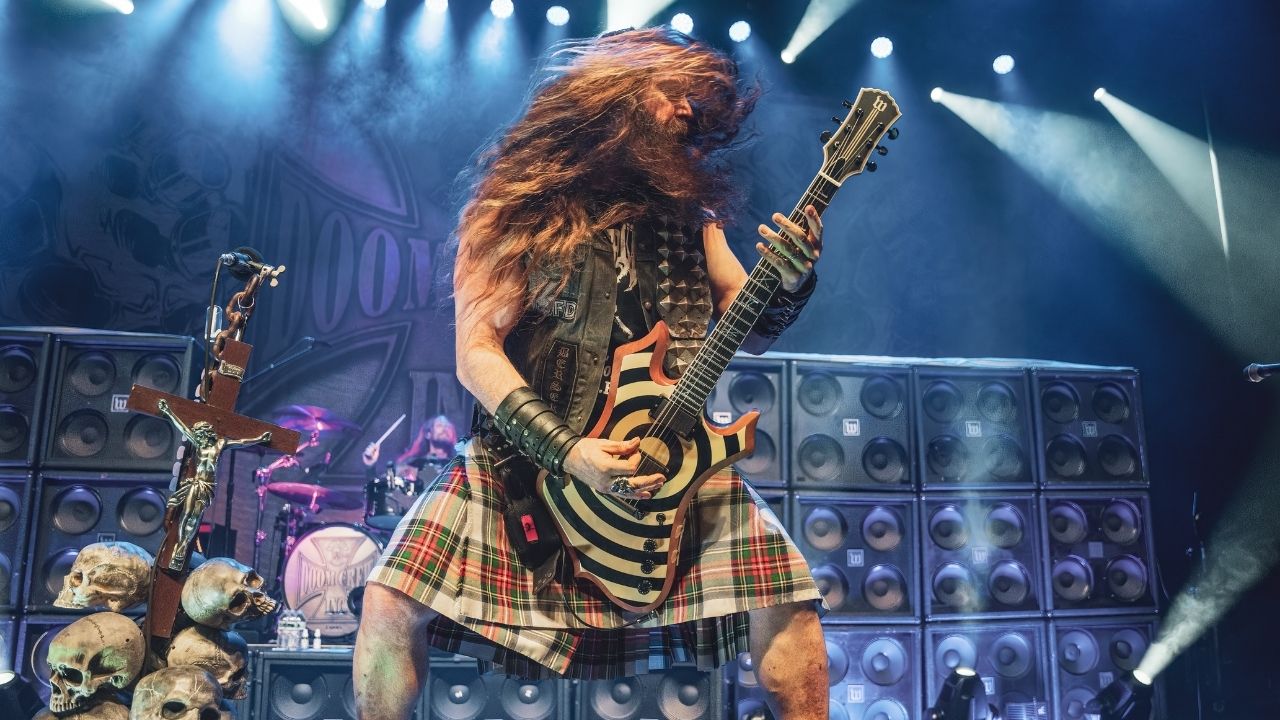
Although he certainly won’t let you tell him — see our exclusive video interview with Zakk for the evidence — for nearly four decades, Zakk Wylde has been a defining image in the world of modern heavy metal guitar playing. From his wrecking-ball riffs and rhythms to leads with precision-picked pentatonics, André-the-Giant-sized vibrato, and his signature pinch-harmonic squeal, he’s always had that larger-than-life presence, both in the studio and on stage.

Part guitarist, part Viking berserker, he became Ozzy Osbourne’s most enduring right-hand man during the Prince of Darkness’ thunderous third act (after Black Sabbath and Randy Rhoads’ solo resurrection) — a musical partnership that’s become more like family than “hired gun.” And when Ozzy took his final bow in his hometown of Birmingham at Villa Park last summer, it was only fitting that Zakk was there for the closing chapter.
However, as Zakk tells Thinking About Guitar, he felt it was far from truly being the end, recalling his final messages from Osbourne as they made plans for new music:
“Oz was just like, ‘Zakk, we gotta do another record.’” And while Wylde never expected Ozzy’s days ahead to be so few, he was confident Sharon Osbourne would “probably end up booking, like, a yearly ‘Back to the Beginning,’” as it would “give him something to shoot for.” However, it wasn’t to be.
Of course, standing beside Ozzy is only one part of Wylde’s considerable musical output. Since forming Black Label Society in 1998, the band has been his vehicle for building a deep catalogue of Southern rock-influenced heavy tunes — and a dedcated fanbase, or “chapters,” as Zakk puts it — with every road leading to the Black Vatican. Now, the band returns with a new album, Engines of Demolition, out March 27 via Spinefarm Records.
It’s the band’s first full-length release in four years — and four years is an age in music these days, with the “what’s next” attitude to releases, shortened cycles, and less importance placed on physical media overall — but as far as Zakk’s concerned, that suits him fine.
“I’m actually enjoying the way this album’s come together. We started the album in 2022 — did some songs, then we’ve been doing the Pantera Celebration, so I was just like, ‘Well, there’s no sense in putting a Black Label album out,’ because you can’t tour behind it, or I can’t do anything, because we’re committed to doing what we’re doing right now. So, in the meantime, I’ll just keep writing songs.’ So that’s what we did.”
The album’s slow-burn process is why we’ve been hearing parts of Engines of Demolition for a while now — singles like “The Gallows” and “Lord Humungus” landed over a year ago, even as much of the record was still being written and tracked in more recent months. And while muscular new tracks like “Name in Blood” kick things off with aggression, it’s the emotional centre of the album that sets it apart: Wylde’s heartfelt tribute to Ozzy, simply titled “Ozzy’s Song,” featuring a solo played on Zakk’s bullseye-emblazoned 1981 Gibson Les Paul Custom, “The Grail” — a guitar that hasn’t appeared on a record in over a decade — but more on that later.
The release gap was caused not only by the aforementioned commitments to Ozzy and Sharon, but also by Pantera — paying tribute to another lost brother by performing Dimebag’s guitar parts show after show in celebration of shred. It was a schedule that, on a day that rocked the heavy metal community, saw Wylde back onstage just hours after receiving news that Ozzy had passed away. However, for Wylde, there was no other way.
“Well, you have to — you can never crawl in a corner. Vikings don’t do that,” Wylde explains. “That doesn’t even fit in the vocabulary. I mean, it doesn’t even exist. And just like with Ozzy: no matter what adversity he came through in his life, you know, throughout his career, it was never ‘woe is me,’ or that victim mentality. It was just like, ‘Well, this has to get done, so we gotta keep going.’ You know, there’s a mountain in front of you and that’s life, and it’s either you go through it, around it, over it, under it — or you just blow it up. I mean, the bottom line is, we gotta get to the other side of this thing. And that’s it. You never put your head down — ever. That’s the way Ozzy rolled. So it’s just like, we gotta get up on stage. It’s gotta get done. That’s it.”
Wylde never saw Ozzy again after the final show in Birmingham, but in the days that followed, they stayed in constant contact — and even then, they were already laying the ground for another collaboration, with Osbourne clearly carrying a vision of how he’d like his next solo record to sound.
“After we did the gig and everything, we were back home. Oz was just like, ‘Zakk, we gotta do another record.’ You know, like when you were going through your Allman Brothers/Skynyrd phase when we were doing No More Tears. He’s like, kind of more like that — you know — just like heavy but melodic. You know what I mean? Not just pummeling, stupid heavy or whatever.
“And I was like, ‘Oz, whatever you want to do.’ He goes, ‘I’m not kidding.’ I go, ‘Sure.’ I go, ‘Surely, you must be kidding.’ And he goes, ‘No, I’m not kidding — and don’t call me Shirley.’”
Although his famously sharp, witty sense of humour clearly never wavered, the frustration of Osbourne’s situation was very real — and Wylde was keen to reassure him, to keep him pushing forward.
“I would always tell him, like, ‘Oz, just keep doing your therapy,’ and, you know, hitting the iron, and keep doing your training, and taking your vitamins, and saying your prayers.
“Because he’d be pissed off and frustrated, you know — just like, ‘Man, this sucks.’ It was like taking three steps forward, then taking five steps back for him at times. But I was like, ‘Oz, just keep plowing ahead, man, until you’re better, and then we’ll start touring again,’ you know.”
With the world tuning in for Ozzy and Black Sabbath’s final bow for Back to the Beginning, Wylde — who’d already seen a couple of “farewell” runs in the Ozzy/Sabbath universe (Ozzy’s No More Tours in 1992. Black Sabbath’s The Last Supper in 1999. Black Sabbath’s The End in 2016–2017. Ozzy’s No More Tours II in 2018) — knew better than to treat the word final at face value. So when Villa Park arrived, Wylde wasn’t hearing “the end.” In fact, it was far from it.
“Whenever we’d speak on the phone, we’d talk about plans, you know. I figured Mom [Sharon Osbourne] would probably end up booking, like, a yearly ‘Back to the Beginning,’ because it went over so well. And it was just like: this would give him — every year — it would give him something to shoot for. Until he could do it more often, you know, like him getting back on the road,” says Wylde, figuring it could become a yearly goal for Oz.
“The gig was for charity anyway. So just like — round everybody up and do it all over the world. One in Brazil, one in Japan, one in America — do it all over the world once a year. And then in between, he could keep making records or whatever. So that’s where I figured we would take it from there. I didn’t figure Oz would be passing away two weeks after we did the gig.”
No concrete groundwork had actually been laid for any new music together, confirms Wylde: “It was just us talking about what we’d want to do.” But although those plans can never be now, Zakk wasted no time getting to work on a tribute track.
“Well, I had the music already written and I wanted to do something with it. But then after we got off the road — after we laid Ozzy to rest and we got off the road with the Pantera Celebration — I just sat in the house and wrote the lyrics.”
Of course, no great Zakk/Ozzy ballad is complete without a standout solo section — and for “Ozzy’s Song,” Wylde cut the lead parts with his 1981 Gibson Les Paul Custom, “The Grail,” the guitar synonymous with his time alongside Osbourne, and confirms it’s on a record for the first time in over a decade.
“That’s the Grail on that solo…,” Wylde confirms. “The first time it’s been on a record since I started my guitar company in 2016.”
As Wylde tells it, it wasn’t even something he initially thought of doing — despite the six strings’ relevance. It took his long-time producer to connect the dots.
“I didn’t even think to do it until Adam [Fuller] was just like, ‘Zakk, you should break out the Grail for that, because it’s Ozzy’s song.’ I was like, ‘That’s a good idea,’ so I went and got the guitar — the first time it’s been on a record since I started my guitar company in 2016.”
“The Grail” stars on the Oz tribute track, but across the rest of the new Black Label Society album there are plenty more savage shred tones courtesy of Wylde’s own Wylde Audio axes and rig, including the long-awaited Master 100 amp that he promises will be due for release at some point before the end of the year.
“I’ve been playing my Wylde Audio the whole time with the Pantera Celebration — the Master 100,” Wylde says. “You know, it’s actually a 140-watt amp. That’s pretty hilarious. So it just fits perfectly with the whole Spinal Tap, ‘it goes to 11’ thing, you know what I mean? They’re all tube amps and they just sound great. They’re just simple, like a pair of jeans and a T-shirt. You turn it on, plug it in, turn everything up, and then whatever you don’t like, you get rid of. I always laugh when an amp has like 6,000 knobs on. I’m like, ‘This is like insane.’ You know what I mean? It’s just… it’s like you need to work at NASA to figure out how to work this thing.”
Guitar playing is only one side of the coin when it comes to Zakk and BLS. As frontman, Wylde’s been on vocal duty since the band’s inception — and on Engines of Demolition, his vocal delivery is sounding better than ever, but the inspiration may come as a bit of a surprise… sort of.
“Well, between doing Zakk Sabbath, but everything else, we have another side project where we ‘do Justin Bieber, Lady Gaga, and I do a couple of those things.’ So it’s bound to creep in.” Wylde jokes.
Never short of a quick-witted line, Wylde also puts to bed any rumours of contributing to fellow Ozzy collaborator and guitar legend Tony Iommi’s long-awaited new solo release (due out later this year), explaining that Iommi would probably think, “‘Just stay as far away as you possibly can, Zakk. I want this album to be successful. Don’t ruin it.’”
Ozzy Osbourne may no longer be with us, but his influence on Zakk will go way beyond the metal icon’s living years. You can hear it in the roots of BLS’ Engines of Demolition. However, Oz, of course, won’t just be remembered in heartfelt musical tributes, but in a lifetime of stories from those who encountered him. Some are seriously wild tales, but for Zakk, his favourites are quieter, human moments from Osbourne’s later “sober era” — moments that feel like the real John “Ozzy” Osbourne: funny, bleak, and profound — all in the same breath.
“We were doing Ozzmosis or something right before we started recording,” Wylde says. “We were in California, sitting at the house, and Sharon and my wife, Barbaranne, went out to the movies. It was just me and Ozzy. And he goes, ‘You know, I don’t do drugs anymore. I don’t drink anymore. I don’t smoke anymore. I never thought I’d give that up. I don’t even drink coffee anymore.’ And he goes, ‘Zakk.’ And I go, ‘What, Ozzy?’ He goes, ‘Why am I alive?’
“So I go, ‘Well, Oz, look at it. You inspire a lot of people. You make people’s days better. You put a Sabbath record on, Diary of a Madman — it makes people… If they’re having a crummy day, you make their day better. You’re doing God’s work.’ He goes, ‘Yeah, I suppose.’
“He was hilarious, man. That’s why I always said it was a miracle any work ever got done. You’d just be around him for five minutes — he’d be making fun of whatever situation was going on in the world. Like, ‘Have you seen this going on?’ And then he’d take the piss out of that. And whatever it is that we were doing, he’d be making fun of himself all the time.
“I remember one day when Mom [Sharon Osbourne] had a vocal coach come down to rehearsals. We were like, ‘Who’s this guy that just came in?’ We were all asking each other. And Oz goes, ‘Oh, that’s… that’s the vocal coach. He’s just here.’ And I go, ‘A vocal coach?’ He goes, ‘Yes, I’ve got a vocal coach now.’ He goes, ‘A little late in the game for that, isn’t it?’”
Black Label Society’s Engines of Demolition is out March 27 via Spinefarm Records. For more information, visit the official Spinefarm store and the band’s official store.