Gibson Les Paul Custom ’70s Review: An Underrated Nashville-Era Classic
The 70s Custom Buttercream Top looks the part, but the calibrated T-Type humbuckers steal the show—bright, wiry and super responsive to pick attack, in a Nashville-era Les Paul Custom ’70s spec package.

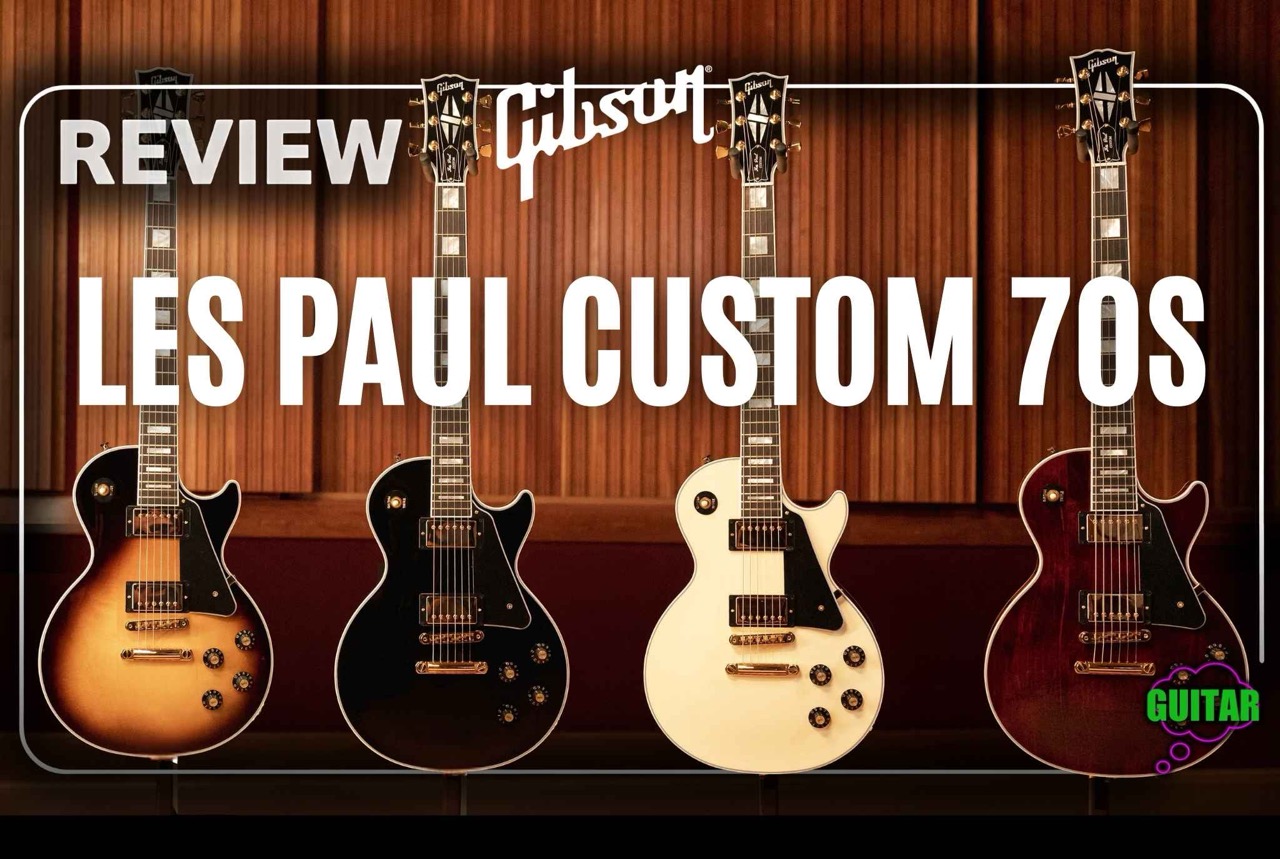
The Les Paul Standard tends to hog the spotlight in the “greatest guitars of all time” conversation, however, the Les Paul Custom has always had its own particular kind of mystique. And if you’re specifically into the ’70s flavour of Custom — the era where these things got a little brighter, a little snappier, and a lot more “rock guitar” centric — Gibson’s Les Paul Custom ’70s is very much aimed at you.
Personally, I’ve always had a soft spot for ’70s Les Pauls. Growing up around Newcastle, a lot of my local heroes played guitars like this, and that sound — that very specific Custom “thing” — has stuck with me. For all the fame of the ’50s era, the ’70s Customs deserve their own place in the Gibson story. They’re a different flavour: a bit brighter, a bit more direct, and when you lean into them they can howl and scream in a way that just feels right for rock playing.
There’s some serious history baked into this model, too. The Les Paul Custom was reintroduced after being discontinued in 1968, and then in the 1970s production moved from Kalamazoo to Nashville, where a lot of these now-legendary instruments were originally made. With that era came a few noticeable changes, and this guitar doesn’t shy away from them — it leans in.
The most obvious is the headstock. It’s the slightly larger ’70s-style shape, topped with that split-diamond inlay, and it looks absolutely fantastic. Turn the neck over and you’ll spot another period tell: a volute. I know loads of people have been asking for this on Les Pauls forever. Personally, I think the whole “Les Pauls always break headstocks” thing is greatly overstated unless you’re careless with your guitar, but the volute does add a bit of mass to a weaker point in the neck joint, and it’s a nice, sensible touch.
Hardware choices are very on-message. You get Grover Rotomatics, which have always been some of my favourite tuners on Gibson guitars — partly because they work great, partly because they look so right on a Custom. The bridge is the Nashville-style two-piece bridge rather than an ABR-1, which fits the whole Nashville ’70s story perfectly. And then there are the little details that make you smile: period-correct witch hat knobs and even period-correct strap buttons. Gibson didn’t have to bother, but it really helps sell the vibe.
In the hand, this one is a pleasant surprise if you’ve got that old “’70s = baseball bat neck” idea in your head. The neck profile is very comfortable — it’s a ’70s neck, but it honestly feels like a ’60s neck to me. The frets are listed as medium jumbo, but they feel more like a medium: not super tall (and I’ll admit I like taller frets than most), but a really usable everyday profile. And crucially, it isn’t that ultra-low “fretless wonder” feel you get on some Customs.
The body recipe is another very ’70s move. Customs from this era shifted away from all-mahogany construction and went to a maple top, often multi-piece. Under the solid Buttercream finish here is a three-piece maple top. You can debate tonewood until the cows come home, but what I can say is it adds a bit of heft on the lap and on a strap — and I actually like that.
This isn’t the lightest Les Paul out there. It’s also not super heavyweight like some old ’70s Customs could be, but it definitely has substance. The back is mahogany, and the neck is maple, and I do believe that helps with the brighter, snappier, more wiry character people associate with these guitars.
But the real story — the thing that makes this one feel like the rock Custom I hear in my head — is the pickups. This guitar has calibrated T-Type humbuckers, and while there isn’t a huge amount of information about them available just now, the sound is anything but vague. They’ve got a screaming, mid-forward, wiry voice and they’re super responsive to pick attack, especially for lead lines. There’s also a really bitey, wiry blues tone in there when you lay back a little.
Controls are classic Custom: three pickup selections — bridge, both pickups, and neck — and I run through all three clean first, then again dirty. Clean, they’ve got that bright, immediate snap; with gain, they turn properly aggressive without losing definition.
By the end of the demo, I’m not pretending to be neutral — I’m enamoured with it. ’70s Customs might not always get talked about the way ’50s Gibsons do, but they absolutely deserve their spot in the pantheon, and it’s great to see this model back in the lineup. There’s a black finish if you want the traditional look, but in Buttercream Top, with those T-Types doing the bright, forward ’70s Custom thing, this guitar feels completely unapologetic: great clean, killer with gain, and built to rock.
For more information on Gibson’s Les Paul Custom ’70s, head to Gibson’s official website.
Click here, for more Gear Reviews