“I Know the End Game, But It Doesn’t Bother Me”: Peter Frampton Gives Health Update on IBM battle, and Why He Hasn’t Stopped playing guitar
Peter Frampton has given a new update on his battle with inclusion body myositis, explaining how the condition has changed the way he plays guitar — and why he still sees it as a challenge worth taking on.

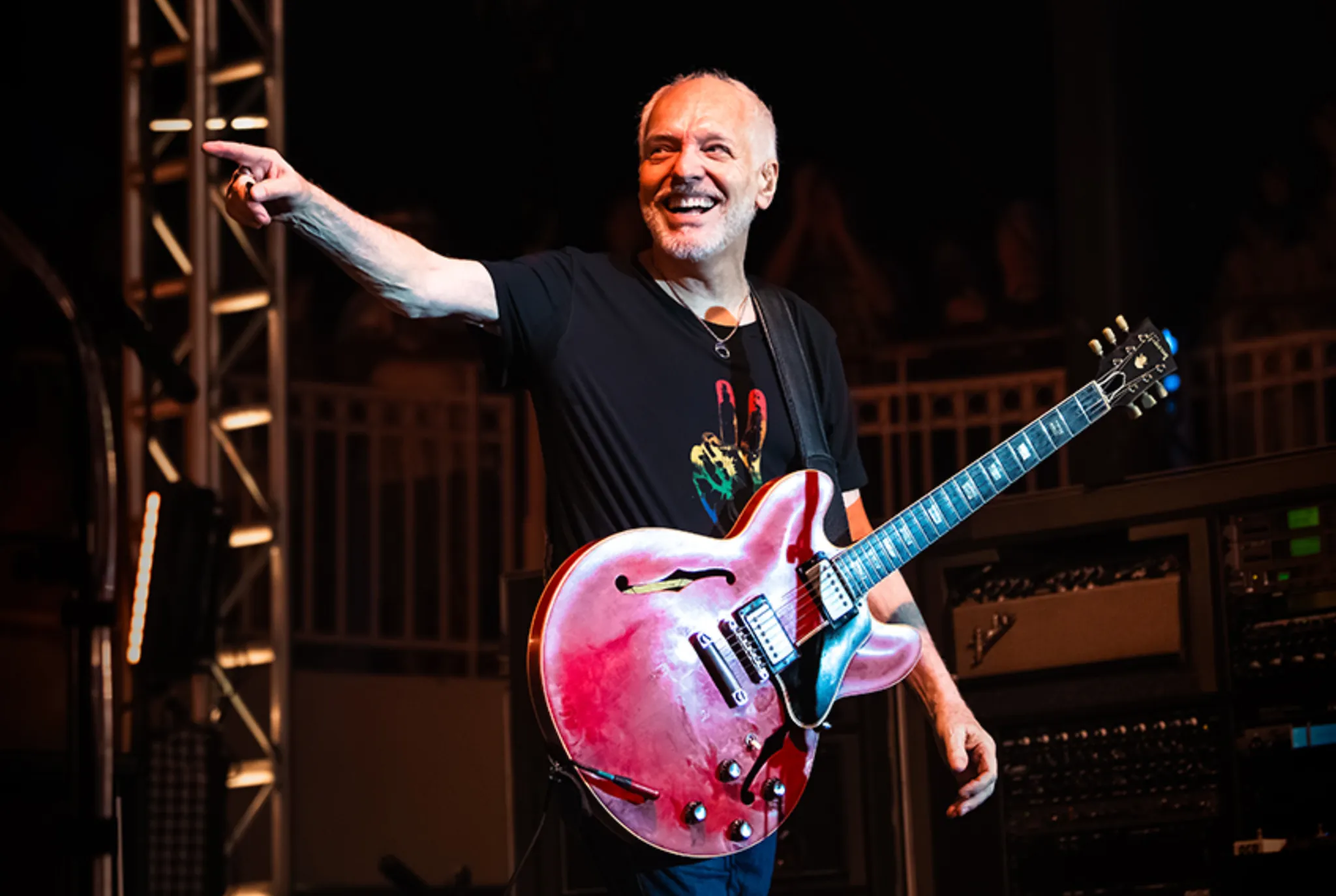
Peter Frampton has given a new update on his life with inclusion body myositis — the progressive muscle condition he first revealed publicly in 2019, when he announced what was expected to be his farewell tour.
When asked by Page Six whether he can actually still play guitar, Frampton pointed to the work he has done over the past year: the new documentary Frampton, his latest album Carry the Light, and more music already in progress.
“I mean, the thing is if you look at it over the last year, I’ve made a documentary and an album and an album and a half actually,” he said. “So, yes, I’m doing okay. But things are changing. It’s progressing.”
“The big things don’t bother me,” Frampton continued. “They probably should more, but I’m a very positive person. That I got from my parents, I think. And my brother’s the same.
“Yes, I know the end game, you know, but it doesn’t bother me,” he said. “I’ve learned to change my life… having to change the way I play a little bit now and again as it progresses is a challenge, and I’m always up for a challenge.”
Frampton first spoke publicly about IBM in February 2019, telling CBS This Morning that the diagnosis was the reason behind his Finale: Farewell Tour. He said then that he had been recording heavily since being diagnosed, adding, “I just want to record as much as I can.”
IBM is a rare muscle disease that causes progressive weakness. Johns Hopkins notes that it commonly affects the wrists and fingers, thighs, and lower legs — all of which have had a huge impact on the way the music legend now performs.
The 2019 farewell tour, though, did not stay final. Since then, Frampton has returned for the Never Say Never, Never EVER Say Never, Positively Thankful and Let’s Do It Again! tours.
He has kept recording, too. In 2021, he released Frampton Forgets the Words, an instrumental album that reworked songs associated with David Bowie, George Harrison, Radiohead, Stevie Wonder and others as guitar-led pieces.
Carry the Light, released in May, is his first album of new original rock material in 16 years. Co-written and co-produced with his son Julian Frampton, it features Sheryl Crow, H.E.R., Tom Morello, Graham Nash, Benmont Tench and Bill Evans.
Speaking to AARP earlier this year, Frampton was blunt about the effect IBM has had on his hands.
“Technically I’m not as proficient as I once was due to IBM,” he said, but added that he now uses “the progression of the disease as a challenge to find how I can play what I played yesterday today.”
He also said the daily work matters: “I play every day. It keeps me active, keeps my fingers going.”
Frampton also revealed he was already working on the follow-up to Carry the Light. “So I haven’t stopped,” he said. He described the physical side of playing with IBM in terms that echo his new Page Six comments: “I like the challenge of being able to do what I do as it progresses.”
Frampton is clearly not playing in the same way he did in the Frampton Comes Alive! years, and he is not pretending otherwise. The disease has changed the mechanics of his hands, his overall strength, and the way he gets through a show.
But he’s not keeping the condition hidden away. During recent shows, he said, he would get up from his chair near the end of the night and address the crowd directly.
“The one thing that it made me realize is that I am fighting a battle, but so are all of you,” he said. “Everyone fights a battle every day, whether it’s their own, their spouses, their children, their relatives, their friends at work, whatever it is, everybody’s going through something.”
“It just made me realize that kindness is the most important thing,” he added. “Because when you meet someone that you know, or you don’t know, you have no idea what’s going on in their life, or in their body, or whatever. So, I just decided that I’m going to concentrate on kindness.”
Nearly seven years after revealing the diagnosis, Frampton’s relationship with the guitar is still very much alive. He’s still playing, still touring, and still recording new music — just in a different way than before.