Baum Backwing Review: A Vintage-Inspired Offset With a Voice of Its Own
The Baum Backwing pairs head-turning retro style with superb playability, custom hardware and seriously versatile tones. Here’s why this gold offset is much more than a pretty face.

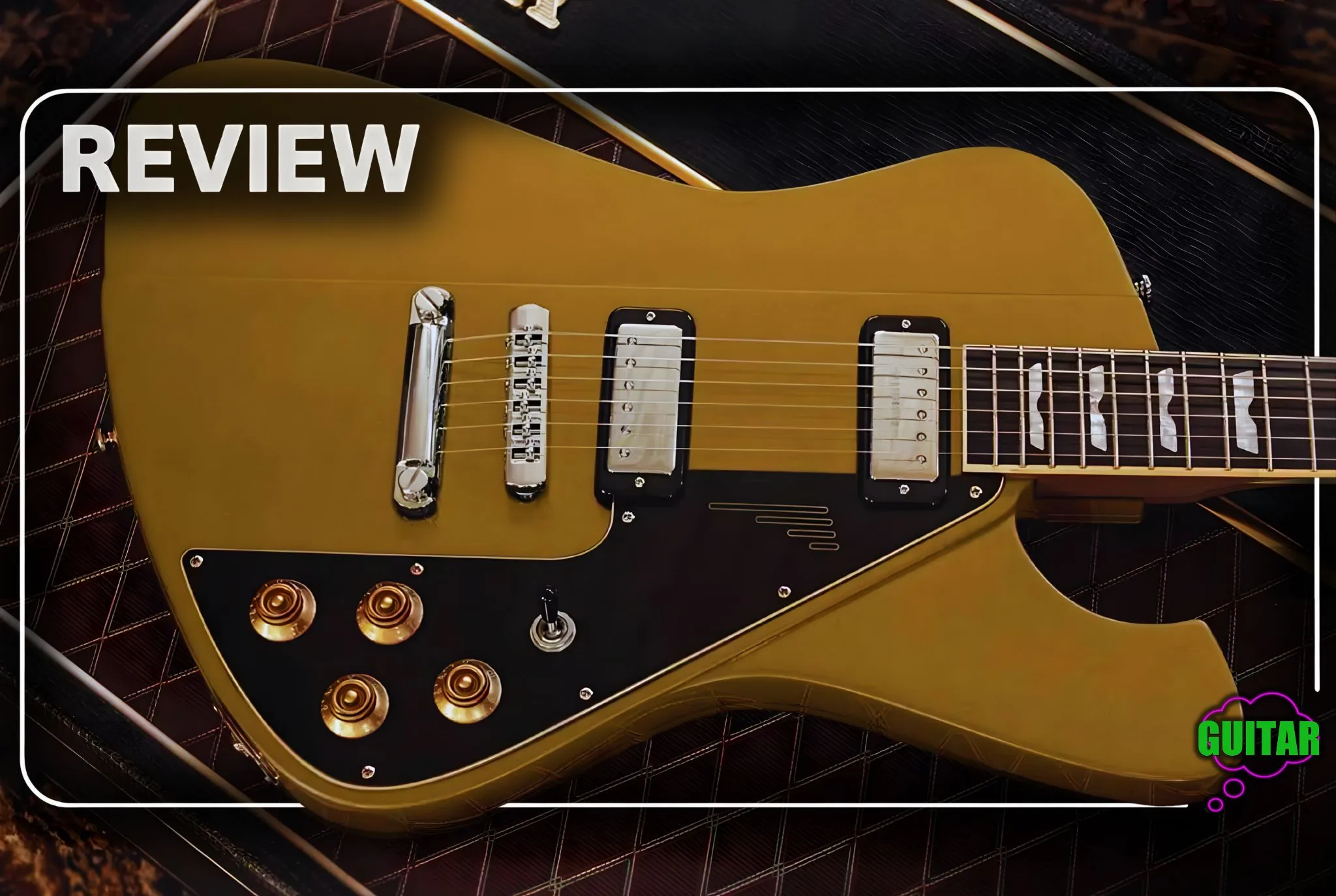
The Baum Backwing is a very strange guitar, and I mean that in the best possible way.
It’s an offset, but not in the usual “somebody moved a Jazzmaster horn around a bit” sense. It has a raised centre section, a hint of Firebird about the body, a gloriously mid-century headstock and enough brass and nickel hardware to make the whole thing look like it wandered out of some alternate 1960s where everyone had much better taste in guitars. It’s distinctive without looking like it’s trying desperately to be distinctive, which is a much harder trick to pull off than it sounds.
Baum is a Danish company, although the Backwing itself is made in Indonesia before being QC’d and set up at Baum’s factory in Denmark. More importantly for us gear nerds, Baum designs almost all of the interesting bits themselves. The body shape, neck profile, tuners, bridge and pickups are all proprietary, so this isn’t just a collection of familiar parts dressed up in a funky body.
And some of those parts are really rather good.
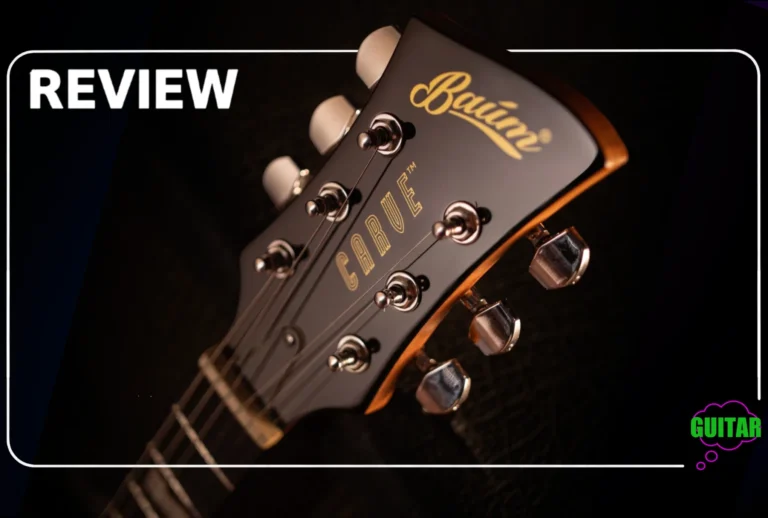
The headstock is the first thing that caught my attention. New headstock shapes are notoriously difficult to get right, and there are plenty out there that look like somebody stopped drawing halfway through, but this one works beautifully. The string pull is long and straight, there’s a roller string tree to help keep everything behaving itself, and the 21:1 ratio tuners are smooth and precise. The mix of brass and nickel hardware gives me strong high-end PRS vibes in terms of feel and finish, which is impressive on a guitar that came in at around £1,500 at the time of purchase.
The neck is roasted maple with a slim C profile, paired with a rosewood fingerboard and a 12-inch radius. The frets measured around 1.25mm high, which is right in my personal happy place. I cannot get on with tiny frets; life is simply too short. These are tall enough to make bends easy without feeling like you’re playing on railway tracks.
It’s a 25.5-inch scale guitar strung with 10–46s, so nothing too exotic there, but the factory setup was superb. Action came in at roughly 1.5mm on the bass side and 1.2mm on the treble side at the 12th fret, with just a touch of relief. That is properly low, and low action has a habit of exposing bad fretwork very quickly. There were no rattles, no choking notes and no dead spots. Nothing. The fretwork was absolutely immaculate.
The body is surprisingly comfortable too. There is a little bit of neck dive when you’re sitting in one position, but shifting into more of a classical playing posture largely sorts that out. The bigger practical issue is the shape itself, because the Backwing doesn’t particularly enjoy some conventional guitar stands. A hanging stand is probably the way to go unless you enjoy unnecessarily tense moments involving gravity and expensive instruments.
At the business end, Baum fits its own Levitator bridge. This is a roller-style design that rocks very slightly backwards and forwards by design, helping with tuning stability. It also works with the Bigsby-equipped versions of the Backwing, although this particular guitar uses a stop tailpiece. Combined with the roller string tree and those excellent tuners, it’s clear Baum has given some serious thought to keeping the strings moving smoothly rather than simply bolting hardware on and hoping for the best.
Then we get to the pickups, which are probably my favourite part of the guitar.
They’re Baum-designed mini-humbuckers housed in P90-sized covers, and they sit in a really interesting sonic middle ground. There’s a bright, open top end that reminds me of a good Strat pickup, but there’s also more low-end weight, punch and general authority underneath it. They’re not as thick as a traditional PAF-style humbucker, and they don’t have quite the aggressively jangly thing you’d associate with a Firebird pickup either.
In other words, they sound like their own thing.
The controls are mercifully straightforward: two volumes, two tones and a three-way selector. No push-pulls, no mystery switches, no requirement to consult a flow chart halfway through a gig. The pickups measured 10.23k and 8.32k, which is very close to Baum’s quoted 10.5k and 8.5k figures, and the guitar uses 500k pots with relatively small tone capacitors.
Clean, the Backwing is clear and articulate without becoming thin. Add some British-style mid gain and there’s enough meat in the sound for crunchy rhythm work and leads, while the bridge pickup develops a really satisfying clang when you start pushing the gain harder. Its natural voice definitely leans more towards vintage-flavoured sounds than ultra-modern metal, but I was surprised by how well it handled a 5150-style high-gain tone. It isn’t what I’d immediately reach for if crushing modern metal was the entire brief, but it certainly doesn’t fall apart when things get heavy.
That versatility is really the Backwing’s biggest strength. It looks like a guitar that should have one very particular personality, but it’s much broader than that. Slide works beautifully, technical playing feels effortless thanks to the neck and setup, and the pickups cover a lot of territory without ever sounding anonymous.
There are guitars that look fantastic but require you to forgive a few things once you start playing them. The Backwing isn’t one of those.
It looks spectacular, the hardware feels expensive, the fretwork is superb and the pickups have a genuinely distinctive voice. If you want something a little left of centre without sacrificing playability or usable tones, there is an awful lot to like here… and frankly, more guitars should be gold.
Find out more about the Baum Backwing at BaumGuitars.com