Baum Savage Review: The Single-Pickup Offset That Absolutely Howls
The Baum Savage keeps things simple with one P90, two controls and plenty of attitude. Here’s how this aggressive offset performs clean and cranked.

There are guitars that give you every conceivable switching option under the sun, and then there are guitars that hand you one great pickup, two knobs and politely suggest you get on with playing. The Baum Savage is very much the latter.
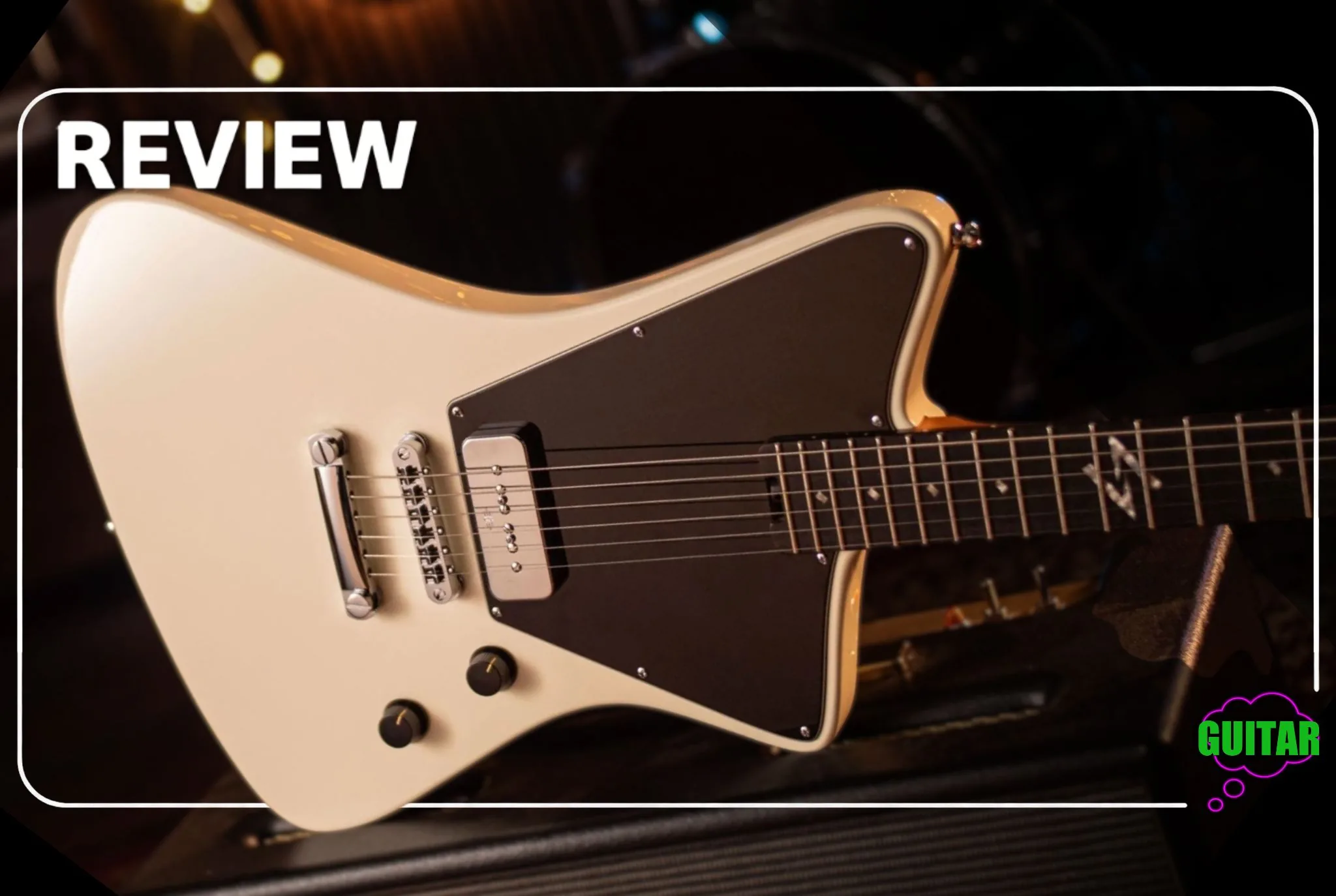
As the name probably gives away, this is Baum’s most aggressive guitar shape to date. The Danish company is usually associated with beautiful mid-century aesthetics and its own in-house pickups and hardware, but the Savage takes that familiar Baum DNA and turns the attitude up considerably. It’s an offset, but not the sort of offset that looks like it wants to play surf music in a nice cardigan.
The single-pickup model is, for me, where the concept makes the most sense. There is a lone Baum Goldsound Amber P90, a master volume, a master tone, and that’s it. No push-pulls, no clever switching and no menu of sounds to memorise. A two-P90 version is available, but there’s something wonderfully pure about having one pickup and nowhere to hide.
Fortunately, it’s a very good pickup.
Through a vintage-style clean amp, the Savage has considerably more subtlety than its appearance would suggest, responding nicely to picking dynamics and offering a surprising amount of variation from those two controls. Start adding gain, though, and things become considerably more entertaining. The P90 absolutely howls through fuzz, sounds fantastic driving a Marshall-style amp and has more than enough bite for screaming high-gain lead tones.
There is, inevitably, some noise when you pile on serious amounts of gain. This isn’t a noise-cancelling P90, and that’s part of the deal. Personally, I’d love to see a single-humbucker Savage somewhere down the line, because I suspect it would be an absolute weapon for more metal-inclined players. Equally, noise-cancelling P90s can sacrifice some of that essential P90 character, and this guitar certainly isn’t lacking in that department.
The rest of the guitar follows a similarly player-focused philosophy. The roasted maple neck has a lovely tactile satin finish and should remain extremely stable when moving between different temperatures and climates — useful if your guitar regularly goes from a freezing car into a roasting rehearsal room. The rosewood fretboard has a 12-inch radius, a 25.5-inch scale and what feel like 22 medium-jumbo frets. Those larger frets are a welcome choice too; compared with the smaller fretwire on the reviewer’s own Baum, they’re a distinct improvement.
That 25.5-inch F-style scale is worth mentioning because you might reasonably expect something shorter from an offset like this. Instead, it gives the Savage a wonderfully snappy response that pairs particularly well with the P90. The razor inlays and oversized Savage emblem around the 12th fret add some visual drama without pushing the whole thing into pointy-guitar parody territory.
At the other end, the reverse-wave headstock looks superb, although reverse headstocks continue to baffle my brain. I know perfectly well where the low E tuner is, yet my hand apparently doesn’t. That’s very much a me problem. The six-in-line 18:1 tuners themselves are super smooth, and Baum also includes two string trees and Schaller-style strap locks as standard — the latter being one of those small additions that suggests somebody involved actually plays guitars rather than merely designing them.
The antique-white body is a solid slab of mahogany with a four-bolt neck joint, and this particular guitar belongs to Baum’s more affordable Vega series. There’s no through-body stringing; instead, you get a stop tailpiece and Baum’s Performer Tune-o-matic-style bridge. Around the back there’s little beyond the single control cavity, which seems entirely appropriate for a guitar this uncomplicated. Other finishes are available too.
Ultimately, the Savage is one of those guitars where the limitations are a big part of the appeal. It has enough range to do lovely clean and dynamic tones, but turn everything up and that P90 becomes gloriously uncivilised. The two-pickup model will undoubtedly make more sense for some players, but if you’re drawn to the Savage in the first place, I suspect the single-P90 version is the one that really gets to the heart of what this guitar is about.
Find out more about the Baum Savage at BaumGuitars.com