VHT D-20 Review: Dumble-Style Tone Without the Dumble Price
The VHT D-20 serves up smooth Dumble-style tones, flexible gain and serious valve feel without the outrageous price tag. Here’s why it’s such a bargain.

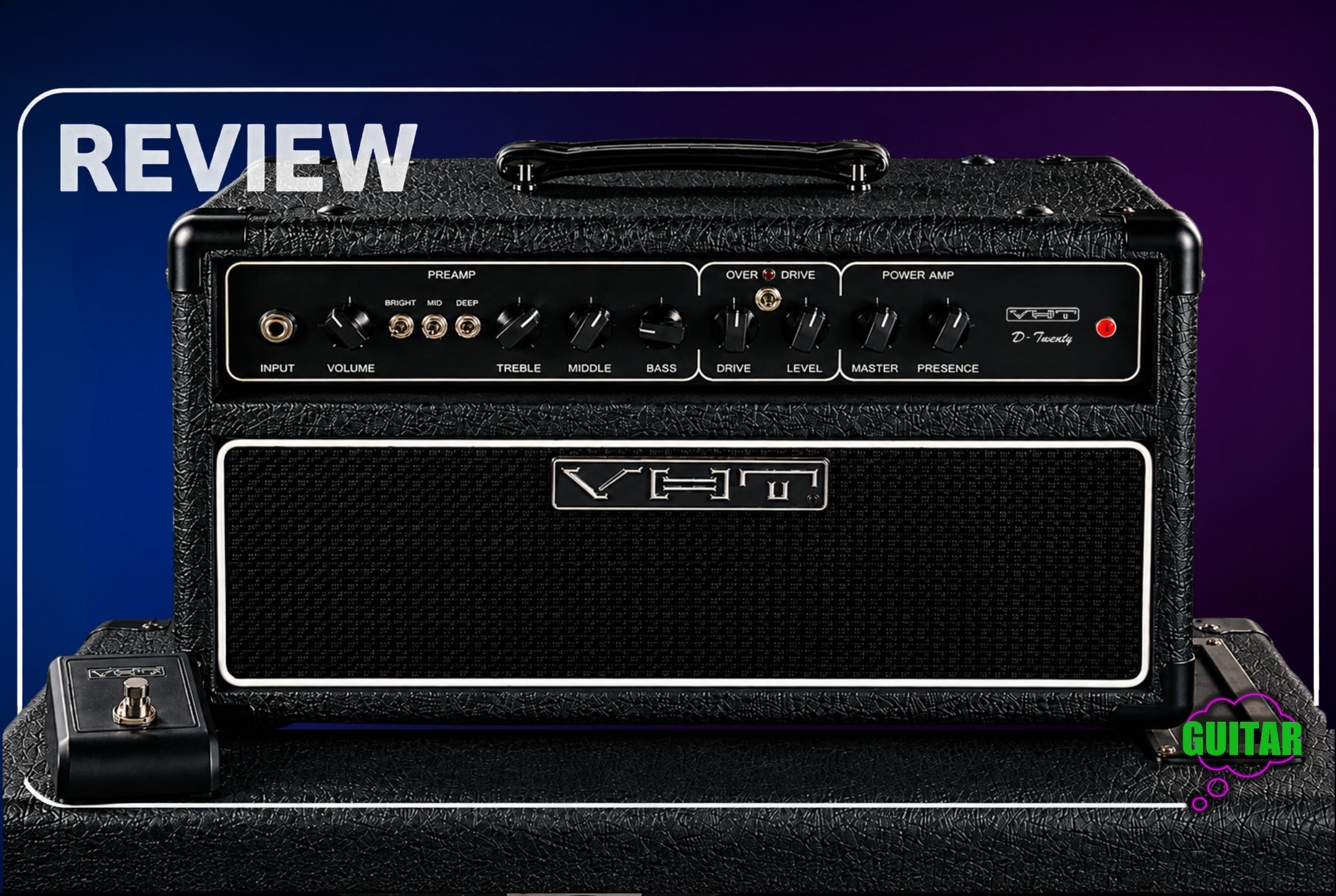
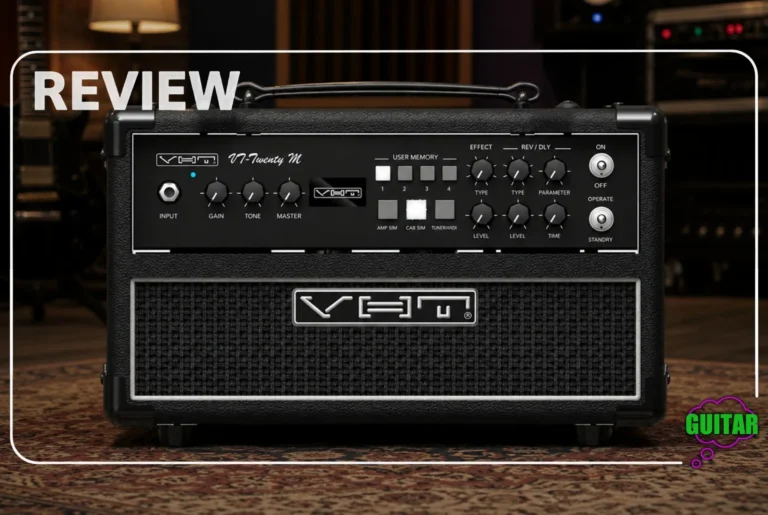
The VHT D-20 brings Dumble-inspired tones into the real world with a 20-watt, twin-6V6 valve design, switchable overdrive, three-band EQ, a trio of powerful voicing switches and a serial effects loop. It follows on from VHT’s larger D50, but pares the concept down into a more affordable package that still delivers the smooth gain, responsive feel and slightly unusual control interaction that makes D-style amps so appealing in the first place.
Dumble amplifiers are known for many things: incredible tone, near-mythical status, being built specifically for individual players, and costing the sort of money that makes buying a vintage Les Paul suddenly look like sensible financial planning. They’re also spectacularly difficult to find, so for most of us gearhounds, owning an original isn’t really part of the conversation.
Thankfully, the D-20 gets you into the same broad tonal universe without requiring the sale of any major organs.
At its heart, this is a 20-watt valve head running a pair of 6V6 power valves, which is a classic Fender-style configuration and makes plenty of sense given the lineage behind the Dumble concept. There’s a single input with its own volume control, but don’t mistake that simplicity for a lack of gain. Push the input past noon and the clean sound begins to develop some hair, and by the time it’s wound right up things get considerably more aggressive.
The master volume gets involved too. Take it beyond halfway and it starts introducing its own clipping and compression, and with everything cranked the D-20 can get downright unruly, eventually pushing into a fuzzy, almost collapsing kind of drive. For an amp most people associate with polished fusion tones and impossibly smooth lead sounds, it can get surprisingly nasty when you ask it to.
The three voicing switches are where things get particularly interesting. Bright is a three-position affair, ranging from neutral through bright to very bright indeed, and it’s extremely handy for matching the amp to different guitars. A dark humbucker can take plenty of extra sparkle, while an especially lively Strat might benefit from backing things off.
The Mid switch is even more dramatic. One position pushes the midrange and adds a little more gain, while the other scoops things out and reduces some of that drive. The scooped setting works beautifully for wiry funk tones and even gets the D-20 doing a surprisingly respectable AC30 impression.
Then there’s Deep, which sounds like it should simply be a gigantic bass button but is actually a little cleverer than that. It boosts the low end while also reshaping the lower mids, changing the overall weight of the sound rather than just piling more bass on top.
Things get properly D-style once you start messing with the EQ and overdrive together. The D-20 has the expected treble, middle and bass controls and, as far as the reviewer understands, they form a Fender-style tone stack positioned before the overdrive circuit. This means they aren’t simply polishing the finished tone. They change what the overdrive is being fed, so moving the EQ can alter the gain response and, crucially, how the amp feels to play.
That might sound like gear-forum nonsense until you actually think about how useful it is. You’re effectively shaping the behaviour of the distortion before it happens rather than trying to fix everything afterwards.
The switchable overdrive has separate Drive and Level controls, allowing you to match it with the cleaner sound or kick the level up for a boost. Presence handles the broader high-frequency response at the power amp, giving you another way to tune the overall character without undoing what you’ve done further forward in the circuit.
It also takes pedals very nicely. The review runs a TS9 into the front of the amp before moving onto a Boss FZ-1W fuzz, and this is where those voicing switches really earn their keep. Instead of treating the amp as a completely neutral pedal platform, you can change how an overdrive or fuzz interacts with the front end by altering the brightness, mids and low-end character.
There’s a serial effects loop around the back alongside the speaker outputs, impedance selector and footswitch input. A Strymon Timeline and BigSky were also used for the larger ambient sounds, although the stereo demonstration was routed through a Waza Tube Amp Expander rather than the D-20’s mono effects loop. VHT has also taken the D-FET-style input idea and moved it into a separate pedal, meaning you can use it with other amplifiers rather than having it permanently tied to the D-20.
As for whether it sounds exactly like a real Dumble, I’m not convinced that’s a particularly useful rabbit hole to disappear down. Original Dumbles were built around the people who ordered them and can vary from amp to amp, while the reviewer himself has only played an original briefly and at considerable volume.
What matters is that the D-20 absolutely lives in the right neighbourhood. The feel is excellent, it produces the sounds expected from this style of amplifier, and it compares very favourably with other D-style amps and clones the reviewer has played.
Yes, it costs more than something like a Boss Katana, but that’s missing the point somewhat. Compared with the boutique amps chasing these tones — never mind an actual Dumble, assuming you can even find one — the D-20 is an absolute bargain.
If you want the feel and flavour of a D-style amp without the collector-grade price tag, the VHT D-20 gets remarkably close to the experience that actually matters: plugging in, turning it up and having a ridiculous amount of fun.
Find out more about the VHT D-20 at VHTAmp.com