Positive Grid Spark Pedal Review: A Complete Guitar Rig in Your Gig Bag
Positive Grid’s Spark Pedal squeezes 33 amp models, over 40 effects, AI tone generation and onboard looping into a remarkably compact, battery-powered unit. Nick Jennison puts it through its paces to find out whether this affordable little modeller could replace your entire guitar rig.

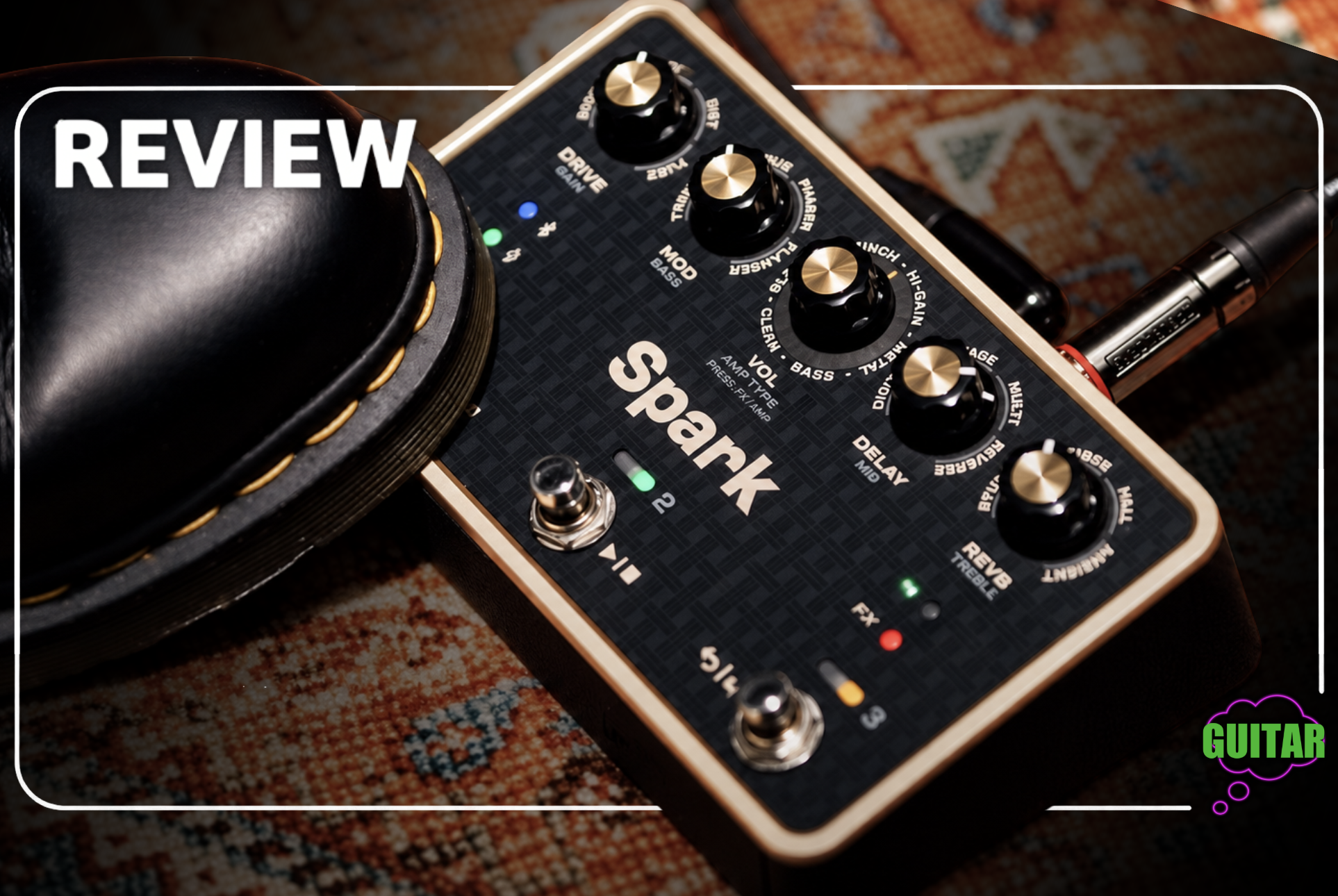
When it comes to travelling, playing quick gigs or filming content at trade shows, I’m a big fan of anything that makes life easier. And while there’s certainly no shortage of compact guitar modellers available these days, Positive Grid’s Spark Pedal takes portability to another level. This diminutive little box packs an entire guitar rig into something that will comfortably fit inside a gig bag, and it doesn’t even need an external power supply. Not bad for something costing less than £200 at the time of review.
Powered by Positive Grid’s Spark HD modelling technology, the Spark Pedal offers 33 amplifier models and over 40 effects, covering everything from sparkling cleans and vintage British crunch through to modern high-gain sounds. There’s a comprehensive selection of drives, delays, reverbs and modulation effects too, making this a remarkably versatile unit regardless of your preferred musical style.
The modelling itself is excellent. There’s plenty of detail and dynamic response on offer, and the six onboard presets provide a convincing demonstration of what the pedal can do straight out of the box. These cover clean, glassy, crunch, high-gain, metal and bass sounds, although there’s considerably more available once you start exploring the accompanying Spark app.
Despite its compact dimensions, the Spark Pedal is surprisingly easy to operate. Three footswitches and five rotary controls handle the essential functions, with the central knob switching between amplifier and effects modes. This gives you direct access to gain, EQ, volume and various effects parameters without having to reach for your phone. For more detailed adjustments, the Spark app provides access to the full range of models and effects, allowing you to get considerably more involved with your tone shaping.
One feature I was particularly interested in exploring was Spark AI, which generates guitar tones from written prompts. I started by asking for something resembling Eric Johnson’s lead sound, which is a notoriously difficult tone to reproduce, especially when certain ingredients, such as his Tube Driver, aren’t available within the Spark platform. Nevertheless, the result was surprisingly convincing.
Next came my usual Master of Puppets test, and once again the AI performed admirably. It selected an appropriate amplifier, added the right amount of front-end push and even included that subtle reverb that people often overlook when attempting to recreate those classic Metallica rhythm tones.
It’s not perfect, of course. Asking for a touch-sensitive ambient lead produced something considerably cleaner than I’d anticipated, although it certainly delivered on the ambient and touch-sensitive aspects. Interestingly, I had even more fun asking the AI to surprise me, which produced some rather inspiring sounds, including a lovely lo-fi tape-style patch. I’m not normally the biggest fan of AI tone generation, but as a means of discovering sounds you might never have thought to create yourself, there’s definitely something worthwhile here.
The onboard looping functionality is another welcome addition. There’s a conventional looper offering recording, overdubbing and undo/redo, alongside a Groove Looper that incorporates drum patterns. Both are simple to operate using either the footswitches or the app, and they’re particularly useful for practice, songwriting and developing ideas without getting bogged down in complicated menus.
Where things get especially interesting is how easily the Spark Pedal can fit into an existing setup. Alongside stereo outputs, there’s MIDI in and out, headphone monitoring and USB audio interface functionality. You can disable the cabinet simulation for use with external IRs, connect through an amplifier’s effects loop or bypass the amp modelling altogether and use it purely for effects.
It also makes an excellent backup for live work. If your main amplifier decides to call it a night before you do, you can enable the appropriate amp modelling and run directly to front of house. With six presets available underfoot, there’s more than enough flexibility to cover most gigs without needing additional equipment.
Perhaps my favourite feature, though, is the rechargeable battery. During testing, the pedal had been running for a couple of hours without showing any signs of running out of power, and USB power is available should you need it. I can see this being particularly useful for hotel-room practice, recording demos or capturing guitar content at events where dragging around a conventional rig simply isn’t practical.
At less than £200, I honestly struggle to think of many pieces of guitar equipment offering this much functionality for the money. The Spark Pedal sounds superb, feels great to play and manages to cover an enormous range of applications without becoming unnecessarily complicated. Whether you’re looking for a compact gigging solution, a useful addition to your existing setup or something to keep handy for emergencies, Positive Grid has done a tremendous job here.
Find out more about the Positive Grid Spark Pedal at PositiveGrid.com