“We’re doing that thing we thought we’d never do”: Joe Satriani and Steve Vai on finally making the album they joked about in 1990
Back in 1990, Joe Satriani and Steve Vai had already entertained the idea of making a record together. Finding the time was another matter. Thirty-six years later, the long-awaited SatchVai debut, The Sea of Emotion, is finally here.

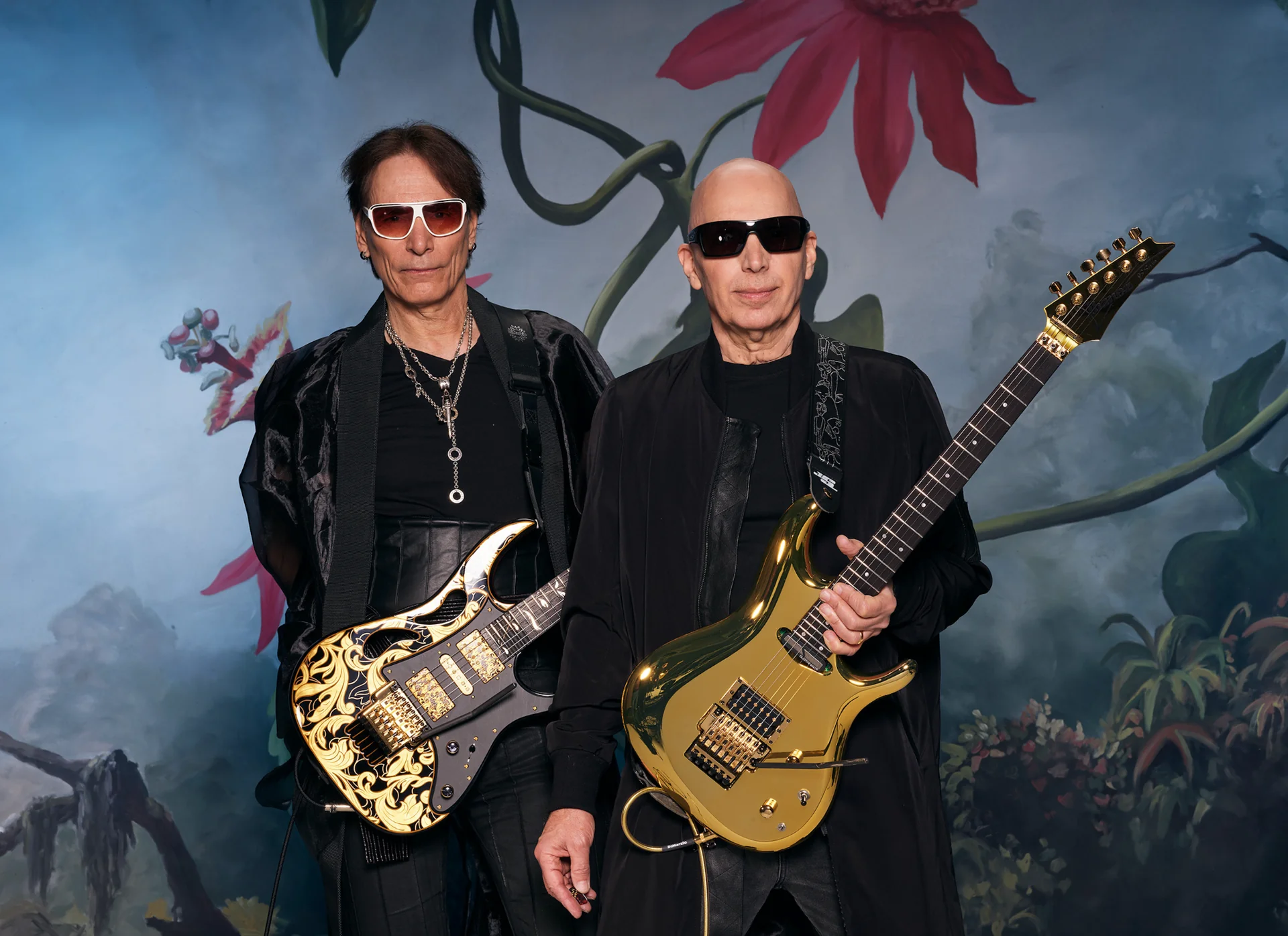
Thirty-six years after joking about it in Guitar World, Joe Satriani and Steve Vai’s long-awaited SatchVai debut, The Sea of Emotion, is finally here. The pair tell Thinking About Guitar why Steve had begun to wonder whether it would ever happen, recall trading solos on Alice Cooper’s “Feed My Frankenstein” and explain why Vai is “off-grid until 2029” but might still make an exception for his former David Lee Roth bandmate Billy Sheehan.

Back in 1990, Joe Satriani and Steve Vai had already entertained the idea of making a record together. Finding the time was another matter. Satriani had followed the breakthrough success of Surfing with the Alien with Flying in a Blue Dream, while Vai had moved from David Lee Roth’s band to Whitesnake, with Passion and Warfare still to come.
Asked about the possibility in their joint interview for the April issue of Guitar World, Satch suggested they would get around to it “when we’ve become totally unpopular”. Vai even supplied a song title: “The Sea of Emotion”.
Thirty-six years later, they’ve delivered! Their first full album as SatchVai follows more than five decades of friendship, teenage guitar lessons and countless nights sharing a stage. For fans, a record together might have seemed inevitable. For the two men actually trying to find room for it, that was far less certain.
Speaking with Thinking About Guitar, Vai admits he had started to wonder whether the opportunity had passed.
“It was probably at the back of our minds even when we were teenagers,” he says. “But you don’t dare go there in a way. We were having a lot of fun playing together, doing G3 and many things.
“I remember not too long before we started this project, there was a thought that came into my head that said, ‘I wonder if Joe and I will actually ever make a record together. We’re getting older, and has that train left the station?’ And then I got the call for the G3 reunion.
“Right from there, everything just happened perfectly on time and perfectly organic.”
Their history goes back to Long Island, where a teenage Vai took lessons from Satriani. Joe was a few years ahead of him, and the admiration went well beyond what Steve was learning on the guitar.
Satriani’s band was called Tarsus. For a while, Vai’s younger group called themselves Susrat – Tarsus backwards. Even their singers were brothers.
“We adored these guys,” Vai recalls. “We’d go to all their shows. We couldn’t believe how good they were. We’d just talk about them all the time and try to emulate them.”
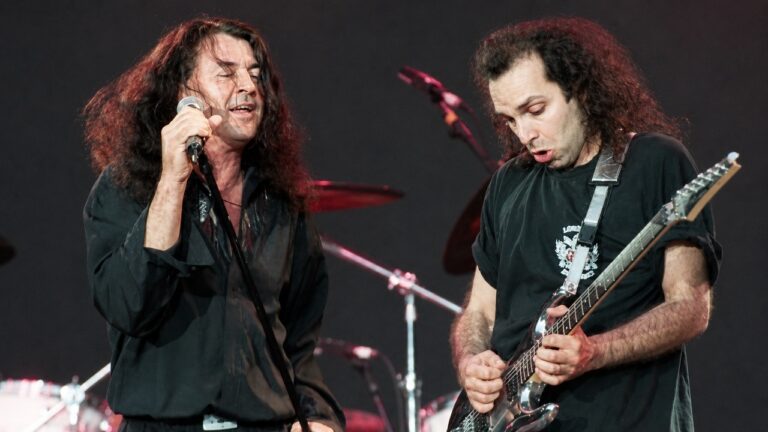
By the summer of 1987, the pair were sharing a stage at the Limelight during Chicago’s NAMM show. G3 followed in 1996, with Eric Johnson completing the original lineup. But all those opportunities to play together never quite became an opportunity to write and record a whole album.
“We were so individually driven to create all the albums that we were busy creating,” Vai explains.
“Steve and I are very similar,” Satriani adds. “Inside our heads, whatever, our spirits, we’re thinking, ‘Save time to make this kind of album, this kind of record, do this, do this.’ And so when people come to us with ideas about, ‘You could do this,’ we’re thinking, ‘Yeah, but I’ve already got my schedule going.’”
The G3 reunion began with Joe’s son, ZZ, calling about a documentary. Neither guitarist expected that idea to lead to the ten-track record they’re discussing today.
“It was tied to him making a film about his life starting out on the road as a four-year-old when we started G3,” Satriani explains. “Nobody thought it would end up starting this cycle. We just thought, ‘Oh, that sounds like a great idea. Let’s do it.’ And everyone just sort of fell in line.
“Then, one thing after the other. It’s like, ‘Hey, we’re doing that thing we thought we’d never do.’”
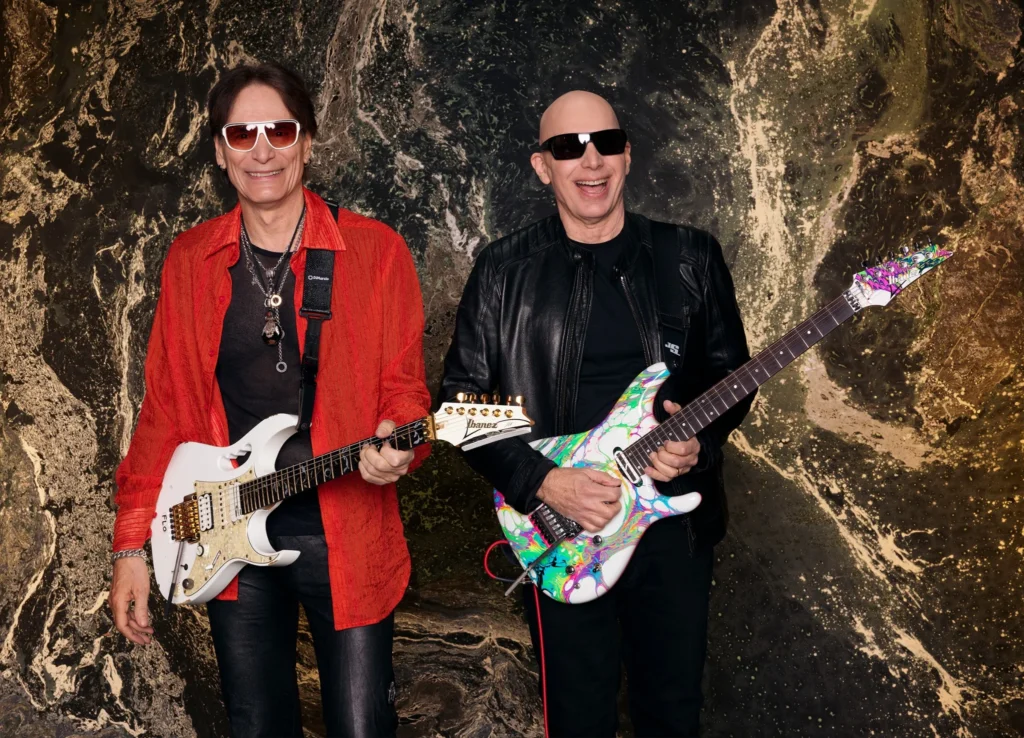
The album title wasn’t the only thing worth revisiting from that 1990 conversation. Satriani also described hearing an inner message in Vai’s playing – something beyond the technique that he connected with, without quite knowing what it was.
Thirty-six years on, he still hasn’t worked it out.
“No. No, thank God,” he says. “It’s always surprising and inspiring. That’s his gift, is that there’s a special spiritual message behind the notes and the chords and the rhythms and everything. People around the world recognise it. That’s why he is who he is.”
“In my mind, I’m just thinking, ‘Buy more records, buy more tickets,’” Vai jokes.
Even after all those years, Joe could still catch Steve off guard. “The Feeling I Know”, one of the new album’s standouts, began as a melody and chord structure Vai captured on his phone late one night. He sent it to Satriani to see what he might do with it.
“The next thing I know, I got back this beautiful arpeggiated rhythm thing, that samba, and it set the mood,” Vai says. “It was reflective of the title, and it set the mood for the whole track. I remember thinking, ‘That’s not what I was expecting.’
“This working with Joe has infused fresh ideas into how I would even approach a song, because when I got that part back, I just figured, ‘Oh, okay. He’s taking it someplace totally different and it’s cool.’”
“That was a fun song to collaborate on because we went into it not knowing where it was going,” Satriani adds. “We had this beautiful introduction from Steve, and then it was like, ‘Can we do something with this?’ And we just kept trying everything, which was really great.”
The solos are a particular highlight, with one guitarist picking up where the other leaves off. It’s an exchange listeners may remember from an earlier meeting on Alice Cooper’s “Feed My Frankenstein”.
Both were huge Cooper fans long before they got that call. In fact, during Steve’s lessons, Alice was already on Joe’s bedroom wall.
“There’s a picture of my ’68 Tele and that amp back there, the Univox amp, in my bedroom,” Satriani says, recalling a photograph reproduced in his book. “Back in the side, you can see a poster of Alice Cooper hanging himself.”
“Oh, I remember that,” Vai immediately responds.
Joe’s parents weren’t quite so taken with the image. But his enthusiasm for Cooper lasted, and years later he found himself sharing stories about that fandom with an A&R contact working on Alice’s album. An invitation to record in Los Angeles followed.
“I didn’t know that Steve was going to be invited to play on it as well,” Satriani says. “That sort of came up as the album production was kind of snowballing.”
Despite how well their parts fit together, they weren’t standing alongside one another trading solos. Satriani recorded his contributions in a day and flew back to San Francisco. Vai added his in a small basement studio in Lake Tahoe, with Joe’s playing already on the tape.
“Like Joe, I was a huge Alice Cooper fan, and I remember going to my lessons and seeing that photo of him hanging, thinking it’s so cool,” Vai says. “It was a surprise, and I just got a call and I thought, ‘Well, let me think about it. Yes!’
“I put my part on it, and Joe’s part was on it, so it gave me an opportunity to kind of weave in and out and harmonise in certain spots. I was really happy with the way it came out.”
But as Steve points out, they’d recorded together long before Alice called.
“Oddly enough, it’s not really the first time we recorded together, but it’s the first time we recorded publicly.”
A little of their actual first recording now opens the final track of The Sea of Emotion. The subtitle of “The Sea of Emotion Part Three: Reflections on a Year and a Half” refers to how long Vai had been playing when they made that tape.
“That was the old, old days,” he says. “That was our first recording together. In fact, oddly enough, it’s the only song on our new record where we’re actually playing in the same room.”
Only the lo-fi introduction uses the old recording. Its melody and the parts they played became the basis for the new track. For the rest of the album, touring commitments kept the pair recording separately.
“Soon as we would get off the tour, we’d be on somebody else’s tour,” Satriani says. “So I’d be off with Sammy, and Steve would be out with BEAT.
“It was a bit stressful right at the time because we kept thinking, ‘Can we do this? Is this a good way to make an album?’ But I look back on it and I go, ‘Oh, that was really refreshing.’ Because we’ve certainly made a lot of albums where we pile all our stuff and all our people into a room for three weeks and stare at the clock and play for 14 hours a day. We’ve done that plenty of times.”
For his next solo record, however, Satch is considering doing exactly that: getting back in a room with a band. Alongside his work with Sammy Hagar, he told Thinking About Guitar in our earlier interview that he was already thinking about how to approach another album of his own.
“I’m not sure when I’ll get to record that, but I’m coming up with different ideas about where I would do it and with whom,” he said. “I feel like basically getting in a room – a big room – with musicians and recording more in a live vein, more like The Extremist experience than the last couple of records.”
Vai’s next few years are rather more firmly accounted for. He describes himself as “off-grid until 2029” and, when asked whether he’s serious, confirms that he is.
At the time of our conversation, he was preparing for another BEAT tour, with a major orchestral project to follow in 2027. Composing for that requires “14-hour undisturbed days for five months”.
“Then after that, I go into another extraordinary project that I can’t talk about yet,” he adds. “So, I have a tendency to say yes, and when I start doing that, many things get compromised because I can’t give them the attention they deserve. That’s not uncommon with people.”
Which makes his response to the possibility of working with Billy Sheehan again all the more interesting. Asked about contributing to Sheehan’s proposed re-recordings of unreleased David Lee Roth material from the Eat ’Em and Smile era, Vai is open to it.
“Back then, demos had different levels of completion and quality, but those demos we were doing were really just to outline the song and see if Dave was interested in it,” he explains. “There’s a bunch that didn’t make it, obviously.”
Would he be interested in adding guitar to new versions?
“Well, in an organic situation where it works out, yeah,” he says.
And despite everything he has just outlined about protecting his time, there’s room for an exception.
“With Billy, it might be a different story. So, I don’t know.”
For now, The Sea of Emotion is here, and there’s plenty to enjoy before either guitarist gets to the next project. Whether they make another together remains to be seen… but this one was worth the wait.
SatchVai’s The Sea of Emotion is out now.
Watch our full Joe Satriani and Steve Vai interview on the Thinking About Guitar YouTube channel.