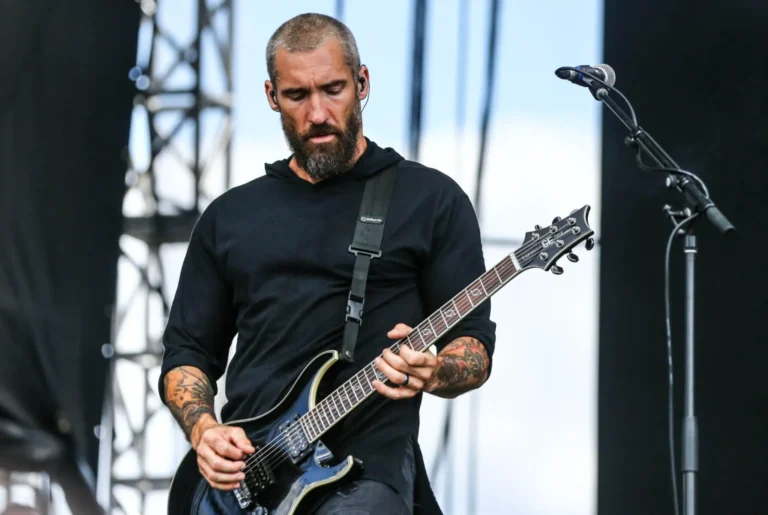
Kenny Wayne Shepherd Was Told Dumble Would Never Build Him an Amp – He Ended Up With 11
Kenny Wayne Shepherd recalls being told Alexander Dumble would never build him an amplifier, only to become close friends with the legendary designer and acquire 11 custom-built and modified amps that helped shape his sound.

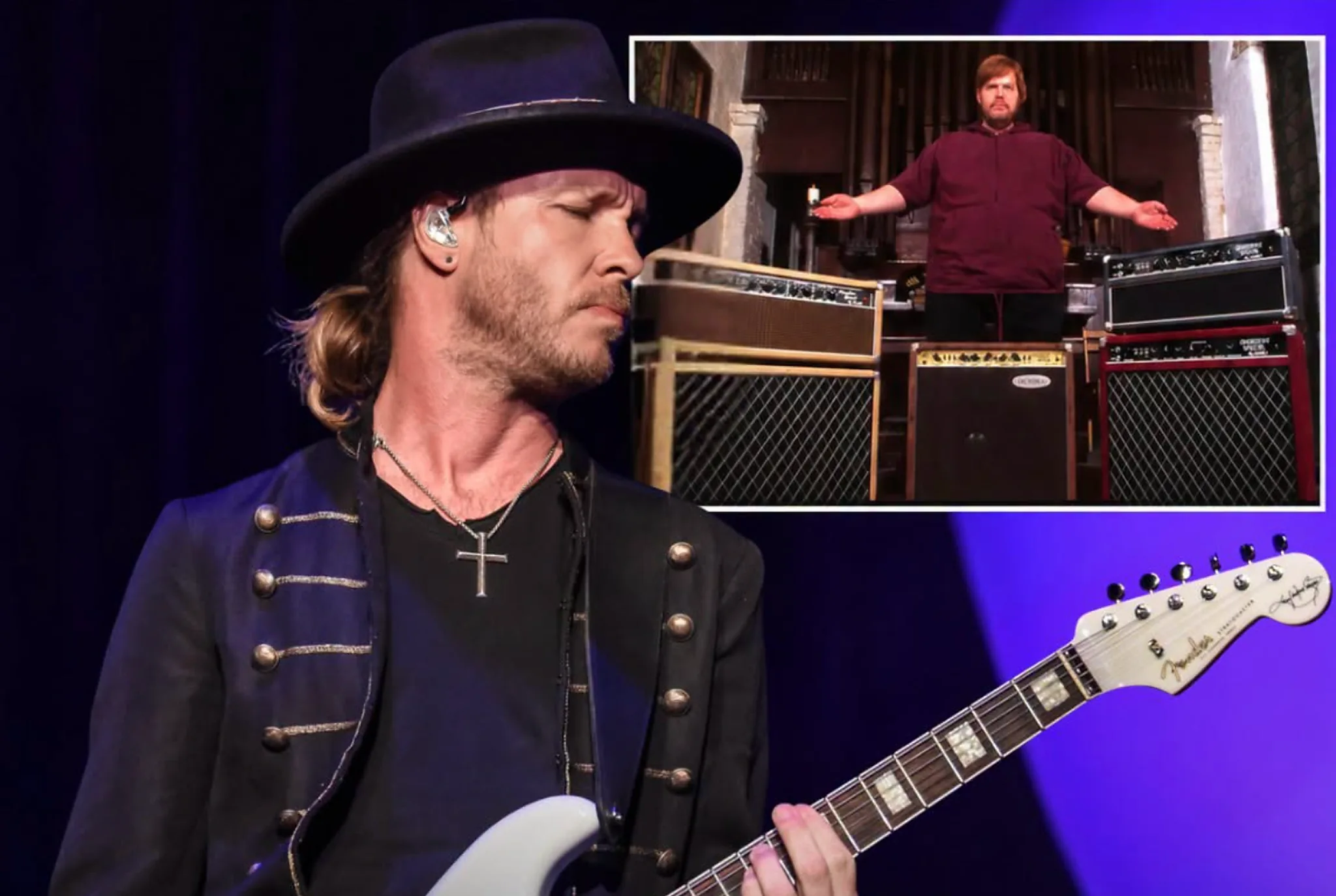
Kenny Wayne Shepherd Recalls Why He Thought Getting His Own Alexander Dumble Amp Was “a Lost Cause”
The blues-rock guitarist has revisited being told that Alexander Dumble would never build him an amplifier, revealing how the legendary designer was already a fan of his music and would eventually become a close friend, building and modifying 11 amplifiers that remain central to his sound.
Kenny Wayne Shepherd has recalled how he was once told that legendary amplifier builder Alexander Dumble would never consider making him an amp, only for the two men to become close friends, with Dumble eventually building and modifying 11 amplifiers for the blues-rock guitarist.
Speaking with Jared James Nichols and Tyler Larson during a recent episode of The No Cover Charge Podcast, Shepherd revisited the encounter, which dates back to the recording of his 2004 album The Place You’re In. At the time, Shepherd had rented a Dumble Overdrive Special for the sessions and was so impressed by the amplifier that he wanted one of his own. “The backstory is in 2004, I was doing an album called The Place You’re In,” Shepherd explained. “And this guy, Andy Brauer, I think, in LA, he rented gear to people. He had a Dumble Overdrive Special. I rented it for the session and I was like, ‘Oh my gosh, this amp is incredible.’”
However, when Shepherd enquired about having Dumble build an amplifier specifically for him, the response was hardly encouraging. “He goes, ‘Well, that guy doesn’t build amps anymore and even if he did, he would never build one for you.’” Shepherd’s response was simply: “Okay.” The comment prompted some amusement from Nichols and Larson, with one joking, “Sorry I like your amp, dude,” while the other suggested it sounded like a challenge.
The individual Shepherd appears to be referring to is Andy Brauer, who operated Andy Brauer Studio Rentals in Los Angeles, supplying instruments and amplifiers to professional musicians and recording studios. Brauer had a longstanding connection to Dumble amplifiers, with Robben Ford previously recalling how he had rented an Overdrive Special from Brauer before eventually commissioning his own amplifier from Dumble in the early 1980s.
As Shepherd explained in a 2024 interview with MusicRadar, the rental also led to an introduction to fellow amplifier builder Andy Fuchs, who subsequently built him several amplifiers for touring. Nevertheless, Shepherd remained interested in acquiring a genuine Dumble, something that seemed increasingly unlikely given the designer’s reputation for being particularly selective about who he worked with. “So, I thought it was like a lost cause from the get-go,” Shepherd admitted.
That changed when Shepherd discovered that one of his friends knew Dumble personally. “Then I realised one of my friends knew him and he goes, ‘I see him every day. Like I talk to him every day.’” His friend offered to mention Shepherd’s name during one of their conversations, although the response wasn’t quite what the guitarist had been expecting. “And so he did, and Alexander like lit up,” Shepherd recalled. “He’d been a fan since my first album. He was like, ‘I’d love to meet Kenny.’”
The pair subsequently arranged to meet and quickly developed a friendship that would continue until Dumble’s death in January 2022. “And so we went and met and we just became fast friends, like very close. Like we talked a lot, visited him a lot, built me all these amps, you know.” Shepherd also recalled spending hours at Dumble’s home, where the builder would listen to him play through different amplifiers before deciding how best to tailor a circuit to his playing style.
“It was a minimum four-hour visit,” Shepherd explained. “You’d sit on the couch and, for me, he would hand me one of his guitars or I’d bring one of mine, and he’d have these amps around the fireplace and stuff.” Dumble would then connect him to different amplifiers, listening intently as he played. “He would sit there on the stool in front of the fireplace and I would just play and play and play, and he’s just sitting there listening. He’d have his eyes closed a lot.”
Shepherd eventually realised that Dumble was paying particularly close attention to the way each amplifier reacted to his playing. “What I realised he was doing was, he was listening to see how the amp was responding to how I play.” After trying one amplifier, Dumble would connect him to another, comparing their response before deciding what changes were needed. “He could tell what I was trying to get out of the amplifier,” Shepherd explained. “And that would give him a basis for which to build the amplifier.”
Dumble went on to build and extensively modify numerous amplifiers for Shepherd, many of which became regular fixtures in his recording and live setups. By the time of his 2011 album How I Go, Shepherd was already using a Dumble Overdrive Special alongside a custom Tweedle Dee Deluxe, while later recordings saw him combining several different Dumble designs to achieve the sounds he wanted. Not every amplifier was built entirely from scratch, either. Speaking to Total Guitar in 2020, Shepherd explained that some of the Fender amplifiers seen in his live rig were actually Dumble creations beneath their original cabinets, with the builder retaining the chassis and cabinet while replacing the electronics with his own hand-wired circuits. These included modified Bassmans, Bandmasters and a Pro Reverb, alongside several smaller Deluxe-style amplifiers.
During his appearance on The No Cover Charge Podcast, Shepherd confirmed just how extensive the collection had become. “I think he built me 11 amps,” he revealed while showing Nichols and Larson around his equipment collection. Among the amplifiers on display was an early Tweedle Dee Deluxe, along with what Shepherd identified as the final amplifier Dumble built for him. The latter was based on a 1957 reissue low-power Fender Tweed Twin, which Dumble had extensively modified. Shepherd explained that he believed only two examples of that particular design had been made, with the other going to producer Bob Rock.
The amplifiers have remained a staple of Shepherd’s recorded sound, including on his more recent Dirt On My Diamonds albums. Speaking to Guitar World in 2024, he revealed that he had taken all 11 of his Dumble amplifiers into the studio, sometimes recording through as many as five simultaneously before selecting and blending the sounds that worked best for each track.
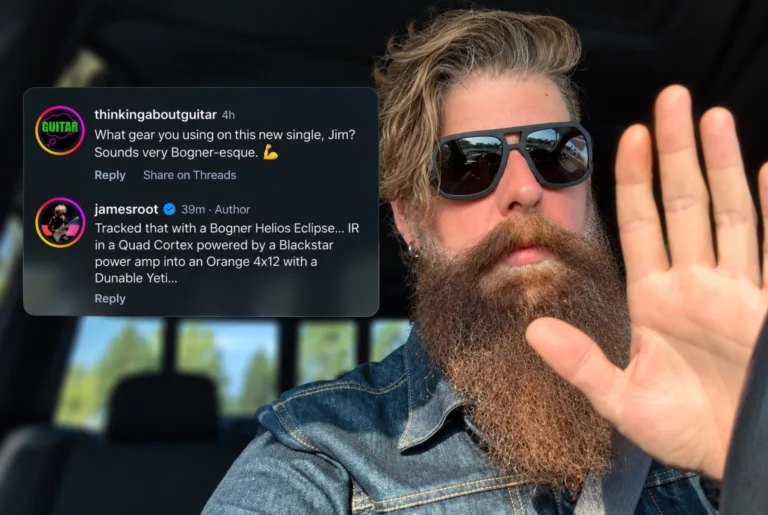
However, with Dumble having passed away in January 2022, maintaining the amplifiers has become a growing concern. During the podcast, Shepherd explained that he had recently started experimenting with the Neural DSP Quad Cortex, partly because of the difficulties involved in transporting his equipment overseas, where he frequently has to rely on hired backline. The digital modeller also presented an opportunity to capture the sounds of his Dumble collection while the original amplifiers were still in good working order.
Shepherd’s concern goes beyond simply finding someone capable of repairing the amplifiers. Having watched Dumble build and service them on numerous occasions, he recalled the extraordinary lengths the designer would go to when selecting individual components, sometimes testing dozens of capacitors or resistors before finding one that met his requirements. “He would go through like 100, maybe, before he’s like, ‘That’s within spec.’ And he did that for every component in the amp.”
Even replacing a failed component with an identical part wouldn’t necessarily reproduce the original sound, something Shepherd is understandably keen to avoid with a collection that was built specifically around his playing over the course of nearly two decades.
“If it’s really good then I can capture the sound of all my Dumble amplifiers while they’re healthy, before anything bad ever happens to them,” he explained. “Because, honest to God, like if one of these blew up, it may never be the same again.”