Music Man 30th Anniversary Axis Review: The ’90s Shred Icon Still Rips
The Music Man Axis turns 30, but it hasn’t lost its edge. We check out the anniversary model’s killer neck, custom DiMarzios, limited finishes and unmistakable ’90s shred appeal.

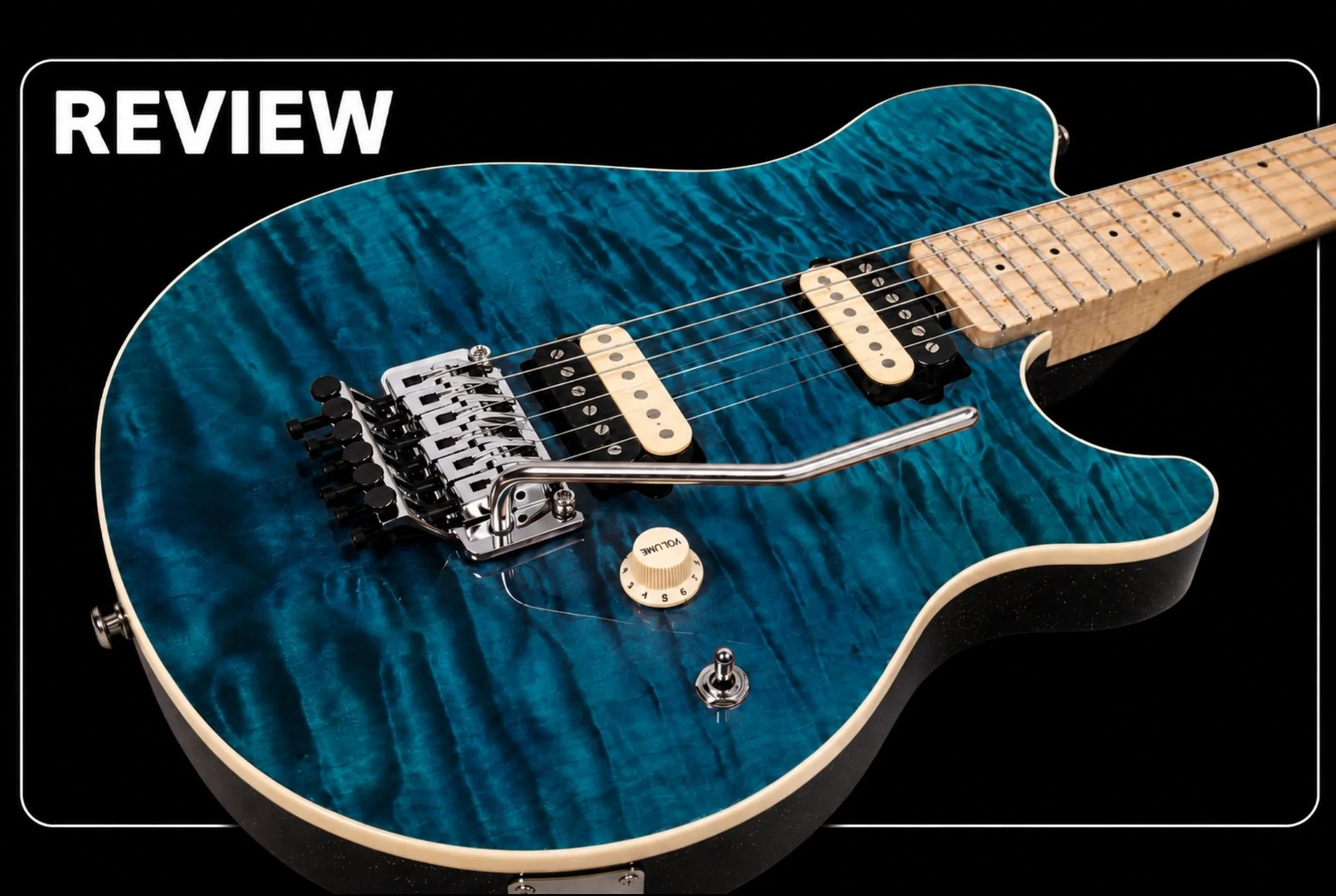
The Music Man Axis has been around for three decades now, which is either a wonderful celebration of one of the great hot-rodded rock guitars or a slightly upsetting reminder that 1996 was, in fact, 30 years ago. Originally developed with Eddie Van Halen, the Axis has always been a wonderfully focused instrument: compact body, great neck, locking trem, hot humbuckers, and very little else getting between you and whatever ridiculous guitar lick you’re attempting.
For the 30th Anniversary model, Music Man has sensibly decided not to mess with that formula too much.
Visually, it’s everything you’d want an anniversary Axis to be. The compact body, four-and-two headstock, sculpted neck joint and quilted maple top are all present and correct, while the translucent finishes lean heavily into the look of the original ’90s models. The Trans Blue version is particularly lovely and, with only 30 being made worldwide, it’s also the sort of guitar you’re probably going to see more often on Instagram than hanging on the wall of your local shop.
Flip it over and there’s a nice little surprise. The rear gets a colour-matched sparkle finish that looks almost black until the light hits it, at which point the blue starts to reveal itself. It’s flashy without being obnoxious, which is probably about as restrained as a quilted-top shred guitar with this much Van Halen DNA is ever going to get.
As with pretty much every Music Man I’ve ever played, though, the neck is where things start getting dangerous for your wallet. The figured bird’s-eye maple looks fantastic, but it’s the feel that really gets you. The headstock is glossed while the back of the neck has a satin finish, giving it that beautifully smooth, almost bare-wood sensation that Music Man does so well. It’s fast, comfortable and substantial enough that it doesn’t disappear in your hand, and the deeply sculpted heel means there’s very little getting in your way when you head for the upper frets.
The anniversary model also gets a few sensible modern upgrades. Stainless-steel frets should survive years of abuse, while glow-in-the-dark side markers are genuinely useful if you’re playing on a stage where the lighting guy has decided that “total darkness” is an artistic choice. The frets themselves are fairly small compared with the railway sleepers fitted to some modern shred guitars, so jumbo-fret devotees might need a minute to adjust, but the guitar still plays incredibly easily.
Then there’s Music Man’s truss-rod wheel at the base of the neck, which remains one of those gloriously simple ideas that makes you wonder why everyone doesn’t do it. No covers, no awkward access, no rummaging around for the one Allen key you definitely owned yesterday. Just turn the wheel and get on with your life.
The bridge is a two-point locking tremolo set up for dive-only operation. If you’re a committed floating-trem player, that may sound like a compromise, but there’s a very good reason for it. Because the bridge sits firmly against the body, you can really dig into rhythm parts and palm-muted riffs without the pitch wobbling around every time your picking hand gets enthusiastic. There’s still plenty of downward travel for all the expected dive bombs and general whammy-bar violence, so you’re not exactly being deprived of fun.
The electronics are equally uncomplicated. You get a pair of custom-wound DiMarzio humbuckers, one volume knob and a three-way selector offering bridge, both pickups in parallel, or neck. That’s your lot. No coil splits, no push-pulls, no mini toggles, no mysterious fourth knob that requires a flowchart.
And really, it doesn’t need any of that stuff.
The pickups are the same custom DiMarzios used in the original design, and they’re a huge part of what makes an Axis sound like an Axis. Clean tones are clear and perfectly usable, but once you start piling on the gain the guitar comes into its own. The bridge pickup is tight, punchy and aggressive without becoming fizzy, while the neck stays full and smooth without turning into mud. Feed it a JCM800-style tone and everything suddenly feels exactly as it should.
This isn’t really a guitar that’s trying to be all things to all players. It’s a purpose-built rock machine, and there’s something refreshing about that. If you want twelve switching combinations and pristine faux-acoustic sounds, there are plenty of guitars out there that will oblige. The Axis would rather you turned the amp up and got on with it.
The biggest problem is likely to be finding one. These anniversary models are being produced in very small numbers, and the Trans Blue version in particular is limited to just 30 worldwide, so availability is going to be tight.
Still, as a celebration of 30 years of the Axis, this gets an awful lot right. The stainless frets and glowing side dots bring things neatly up to date, but the neck feel, trem setup, simple controls and custom DiMarzios preserve everything that made the original so appealing. It still looks like a proper ’90s hot rod, it still sounds enormous with a bit of gain behind it, and it still feels like the sort of guitar that quietly dares you to play faster than you probably should.
Find out more about the Music Man 30th Anniversary Axis at Music-Man.com.