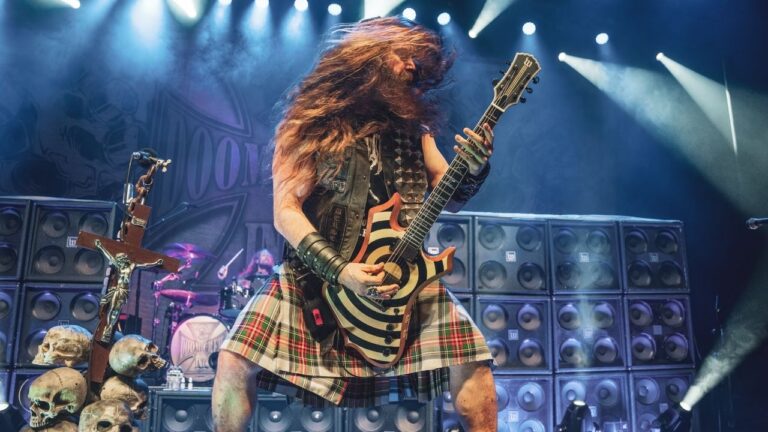
“I think people have focused too much on the feud with Metallica”: Dave Mustaine says Metallica overshadowed “a whole lot of really great Megadeth music”
Dave Mustaine says too much attention has been paid to his Metallica feud as his new memoir revisits Megadeth, David Ellefson and his cancer battle.

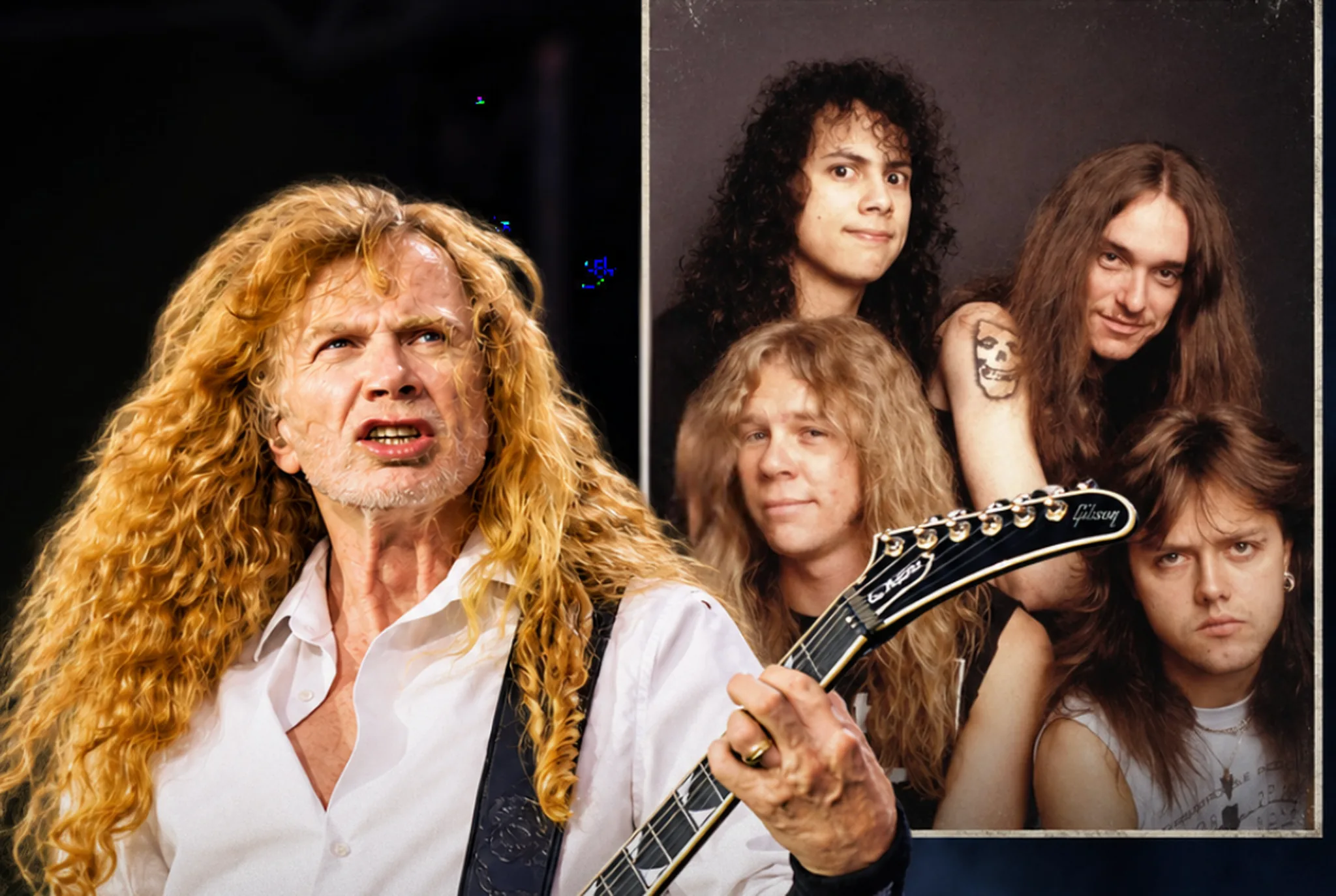
For much of Dave Mustaine’s career, it has been difficult to tell the story of Megadeth without eventually arriving back at Metallica. More than four decades after he was fired from the band, Mustaine apparently thinks people have spent enough time doing exactly that.
Asked by Rolling Stone AU/NZ which part of his story had received too much attention over the years, the Megadeth frontman had a fairly immediate answer.
“I think people have focused too much on the feud,” he said, adding that listeners had “missed out on a whole lot of really great Megadeth music.”
The comment arrives at an interesting point in Mustaine’s career. Megadeth released what has been billed as its 17th and final studio album in January and is currently in the middle of a multi-year farewell tour.
This week, Mustaine also released In My Darkest Hour, a new memoir centred largely around the cancer diagnosis that threatened both his life and his ability to continue making music.
And while the book does return to Metallica, it does so rather differently from the way Mustaine has sometimes discussed his former band in the past.
Mustaine reveals that James Hetfield was among the musicians who contacted him after his cancer diagnosis, alongside Ozzy Osbourne and Paul Stanley. He also makes clear that he does not view his illness as the event that finally ended the decades of hostility surrounding Megadeth and Metallica.
That fight, Mustaine writes, had already been over for years.
His relationship with Hetfield may not be especially close, but Mustaine describes their shared history as something neither man can really escape.
“I care about him, and I know that he cares about me,” he writes.
It fits with the increasingly conciliatory way Mustaine has discussed Metallica during the closing stages of Megadeth’s career. Megadeth’s final album even includes a new recording of Ride the Lightning, the Metallica song Mustaine co-wrote before his dismissal from the band in 1983.
Mustaine said last year that recording the track was intended as a show of respect to Hetfield and Metallica rather than an attempt to restart their friendship. Megadeth subsequently performed the song live for the first time in Bogotá in April.
But if Mustaine appears increasingly willing to leave the Metallica feud in the past, In My Darkest Hour makes clear that the same cannot necessarily be said of his relationship with former Megadeth bassist David Ellefson.
Some of the book’s sharpest passages concern the breakdown between the pair. Ellefson joined Megadeth during its formation in 1983 and remained Mustaine’s longest-serving bandmate across two separate spells in the group.
But Mustaine challenges even the language traditionally used to describe that history.
Ellefson has frequently been described — and describes himself — as a founding member of Megadeth. Mustaine disagrees.
“I started Megadeth and invited him to join,” he writes.
It is a distinction that goes considerably deeper than semantics. Mustaine writes that when Ellefson returned to Megadeth in 2010 following years of legal and personal conflict between the two men, he did so as a “salaried player and not a creative partner.”
Ellefson himself has previously acknowledged that his second stint in Megadeth did not include the ownership position he had held during his original run, although the two men clearly differ over what his overall contribution to the band represented.
Earlier this year, Ellefson argued that his importance to Megadeth had been minimised by Mustaine and said the two musicians had helped shape the band together during its earliest period.
“The fans and the industry recognize my role, but Dave does not,” he told Guitar Player in January.
Their relationship finally collapsed again in 2021 after sexually explicit videos involving Ellefson and a 19-year-old woman appeared online. Megadeth subsequently fired the bassist and removed his already-recorded performances from The Sick, the Dying… and the Dead!, bringing in Testament bassist Steve Di Giorgio to record replacement parts.
But according to Mustaine’s new account, the scandal was not the sole reason the partnership ended. He writes that their relationship had already deteriorated considerably before the videos emerged and suggests Ellefson may eventually have left Megadeth regardless.
“The end was likely near,” Mustaine writes.
Mustaine also makes a more personal allegation. He says he heard Ellefson had been unhappy about the financial consequences of cancelling touring following Mustaine’s cancer diagnosis and claims the bassist could be impatient with him while he was undergoing treatment.
Importantly, Mustaine acknowledges in the book that he is speculating about Ellefson’s motivations and says he never directly asked him about it. Ellefson has not publicly responded to those specific claims from In My Darkest Hour as of publication.
The cancer itself is ultimately the reason the book exists.
Mustaine was diagnosed in 2019 with squamous cell carcinoma at the back of his tongue, at a point when Megadeth was preparing to make what became The Sick, the Dying… and the Dead!.
Rather than suspend work on the album entirely, Mustaine continued recording while undergoing radiation and chemotherapy. He has since described days in which he would receive treatment, travel to the studio, become sick during the session and then continue working.
The possibility that he might never finish the record appears to have been part of what kept him there. Mustaine said earlier this year that he did not know whether the cancer would kill him and did not want to stop recording in case the album turned out to be his last.
In My Darkest Hour follows that period from diagnosis through treatment and remission, but also uses it to revisit Mustaine’s family, addiction, faith and the relationships surrounding Megadeth.
The book includes perspectives from people close to him, including his wife Pam, his children and Megadeth drummer Dirk Verbeuren, rather than presenting the period entirely through Mustaine’s recollection.
It also places some of the more familiar pieces of the Mustaine story in a slightly different context. Metallica is still there, as are the old grudges, the addictions and the decades of personnel changes that have followed Megadeth almost from its beginning.
But Mustaine seems increasingly resistant to the idea that being fired from Metallica should remain the defining event of everything that followed.
That is particularly notable now. Megadeth has reached the point where Mustaine is actively writing the ending to the band’s career: a final studio album has already arrived, the farewell tour is underway and his memoir is looking back on a period in which he genuinely had to consider whether he would be around to finish either.
The irony is that In My Darkest Hour does contain another fairly bitter account of a broken musical relationship. It just isn’t the one with Metallica.