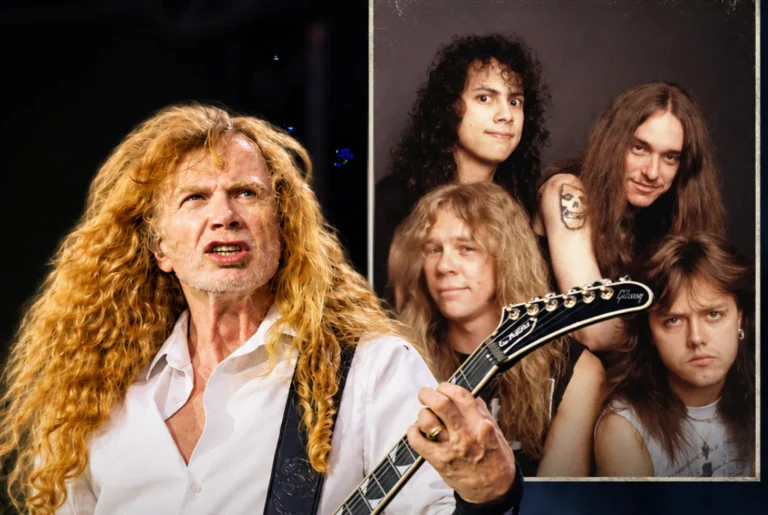
He was very keen and a bit too excited”: Tony Iommi reveals why he turned down one final Black Sabbath album with the original lineup
Tony Iommi reveals why he turned down Andrew Watt’s enthusiastic plan to reunite Ozzy Osbourne, Geezer Butler and Bill Ward for one final Black Sabbath album.

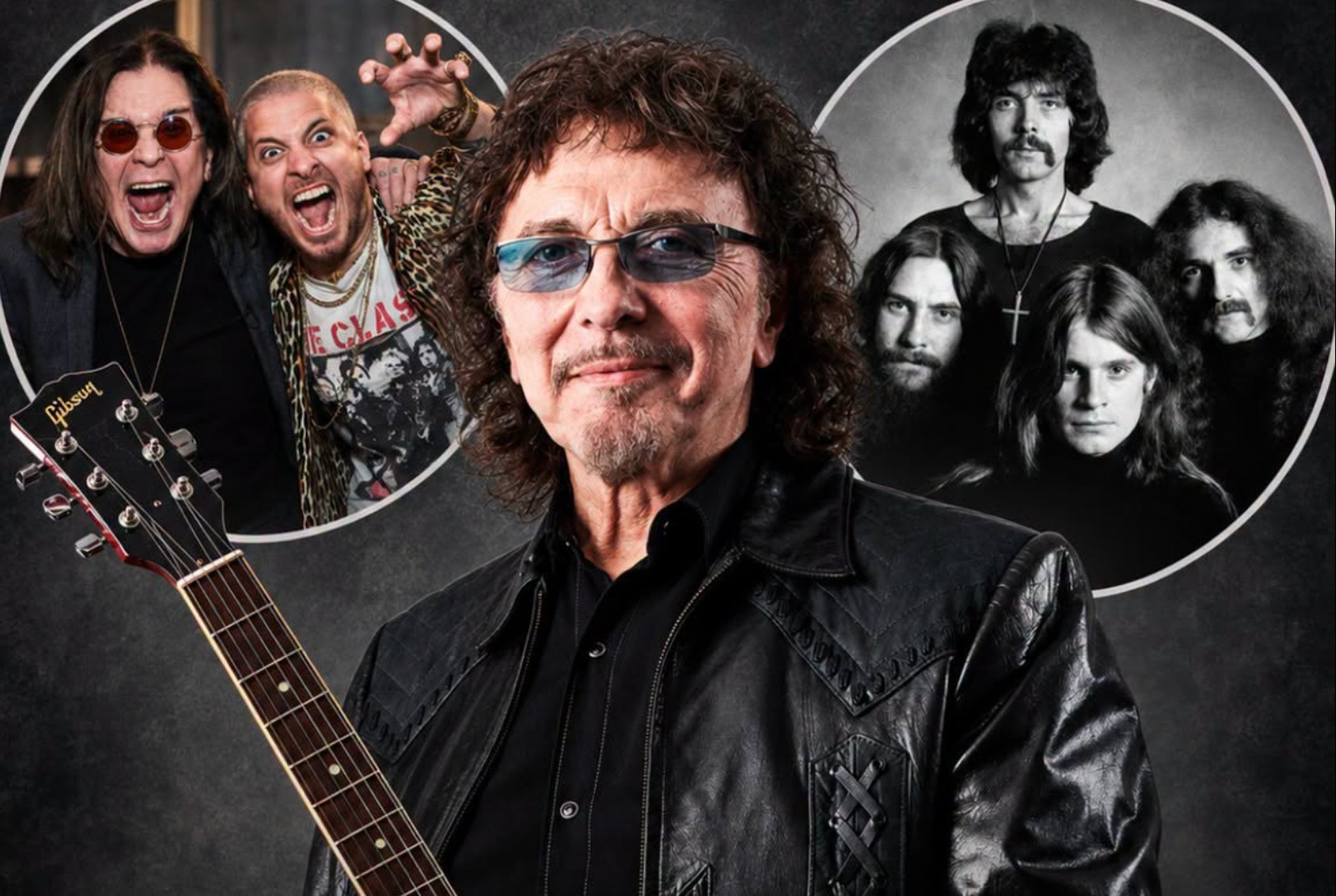
After years of failed attempts, Black Sabbath’s original lineup eventually managed to get back onstage together for one final performance in July 2025. However, according to Tony Iommi, there was also an opportunity for Ozzy Osbourne, Geezer Butler and Bill Ward to make one last album together — more than four decades after the four musicians had last recorded a Black Sabbath studio album as a unit.
The idea came from Andrew Watt, who had already become closely involved in Osbourne’s late-career return to the studio. Watt produced 2020’s Ordinary Man and its 2022 follow-up Patient Number 9, and it was while he was working with Ozzy that Iommi first met him. At some point during that period, Watt raised the possibility of taking things considerably further and getting the original Black Sabbath lineup back into a studio.
Iommi was not particularly taken with the idea. Recalling the conversation in a recent interview with Classic Rock, he described Watt as “very keen and a bit too excited” about the prospect and suggested the producer did not fully appreciate what working with the original Sabbath could involve, particularly when it came to Bill Ward.
That concern makes a good bit more sense in light of what had happened the previous time Sabbath tried to make an album with all four original members. When the band announced its reunion in 2011, Ward was initially part of the plan alongside Osbourne, Iommi and Butler, with the four appearing together as they announced a new album and tour. Negotiations over Ward’s involvement subsequently broke down, with the drummer saying he remained willing to take part but could not agree to what he repeatedly described as a “signable” contract.
Black Sabbath carried on without him, bringing in Rage Against the Machine drummer Brad Wilk to play on 13, which arrived in 2013 with Rick Rubin producing. The album was still a major reunion, marking the first Sabbath studio record to feature Osbourne, Iommi and Butler together since Never Say Die! in 1978, but Ward’s absence meant it stopped short of becoming the complete original-lineup reunion that had originally been announced.
As a result, Never Say Die! remained — and still remains — the last Black Sabbath studio album recorded by Osbourne, Iommi, Butler and Ward together. Watt’s proposal would therefore have meant far more than simply following 13 with another record. Had the four members agreed, it would have been the first Black Sabbath album made by the complete original lineup in almost half a century.
Iommi appears to have been less interested in the historical appeal of that idea than Watt was. Sabbath had already made the comeback album, toured behind it and begun moving towards the end of the band. As Iommi explained, they had already done 13, and he did not particularly like the prospect of reaching the point where the attitude simply became: “Now here’s another album.”
There had been plenty of discussion about a possible follow-up to 13 in the years after its release. Osbourne spoke at various points about wanting to make another record, while Iommi continued writing music of his own, but nothing developed into a firm plan. Instead, Black Sabbath concentrated on touring and launched The End in 2016, a farewell run which concluded with two shows in Birmingham the following February.
Ward was again absent, meaning the band’s apparent final chapter still did not include the four musicians who had started it.
For several years, that looked like the end of the story. 13 remained the final Sabbath album, the 2017 Birmingham dates remained the final concerts and the original lineup had not performed together since 2005. That finally changed with Back to the Beginning, the huge Villa Park event in July 2025 which brought Osbourne, Iommi, Butler and Ward back together for the first time in 20 years.
Even that reunion was something Iommi approached with some caution. He has since spoken about being concerned over Osbourne’s physical condition and whether the singer would have enough energy to complete both his solo appearance and the Black Sabbath set at the end of the night. The show went ahead, with Osbourne performing seated before joining the other three original members for Sabbath’s final four songs.
Seventeen days later, Osbourne died at the age of 76, turning the Villa Park appearance into the final possible reunion of the original lineup and ending any chance that Watt’s proposed studio album might one day have been reconsidered.
That leaves 13 as the final Black Sabbath studio record and Never Say Die! as the last album to feature all four original members. It also makes Iommi’s decision rather more striking in retrospect, because Watt was not proposing a hypothetical reunion involving some later version of the band. He was talking about putting Osbourne, Iommi, Butler and Ward back into a studio together.
It should be noted that Iommi’s comments should not necessarily be read as a wider criticism of Watt. He has not said that he considered him a bad producer or suggested there was any personal falling-out between them. His point appears to be narrower: Watt was extremely enthusiastic about the idea, while Iommi had already lived through decades of Sabbath relationships, reunions, disputes and failed attempts to get the original lineup back together.
By then, Watt had also established a reputation for making new records with veteran rock artists. His work with Osbourne brought together musicians including Elton John, Jeff Beck, Eric Clapton, Slash and Iommi himself, while he later went on to work with The Rolling Stones on Hackney Diamonds and Pearl Jam on Dark Matter.
There is, however, one curious connection to Iommi’s own circle that predates all of that.
More than a decade before Watt became Osbourne’s producer, he played guitar and shared songwriting duties in California Breed alongside Glenn Hughes and Jason Bonham. Hughes, the former Deep Purple singer and bassist often referred to as the “Voice of Rock”, has also been a close friend and musical collaborator of Iommi for decades, appearing with him on Seventh Star, The 1996 DEP Sessions and Fused.
California Breed released one self-titled album in 2014, produced by Dave Cobb, before disappearing almost as quickly as it had arrived. Bonham departed before the touring cycle had properly developed and Hughes later returned to his solo career. Hughes has consistently denied that the band ended because of any serious falling-out and has spoken positively about Watt, saying there were no ill feelings between those involved.
Still, knowing now that Hughes’ longtime friend also declined Watt’s enthusiastic proposal for another Black Sabbath album makes the California Breed episode slightly more interesting in hindsight. It is tempting to wonder whether Hughes’ experience with Watt ever came up in conversation between the two musicians, or whether Iommi simply formed his own impression after meeting him through Ozzy.
There is no evidence that Hughes warned Iommi away from Watt, and Iommi has never suggested that California Breed played any role in his decision to reject the proposed Sabbath album. Anything beyond Iommi’s own explanation — that Watt was “very keen and a bit too excited” — remains speculation.